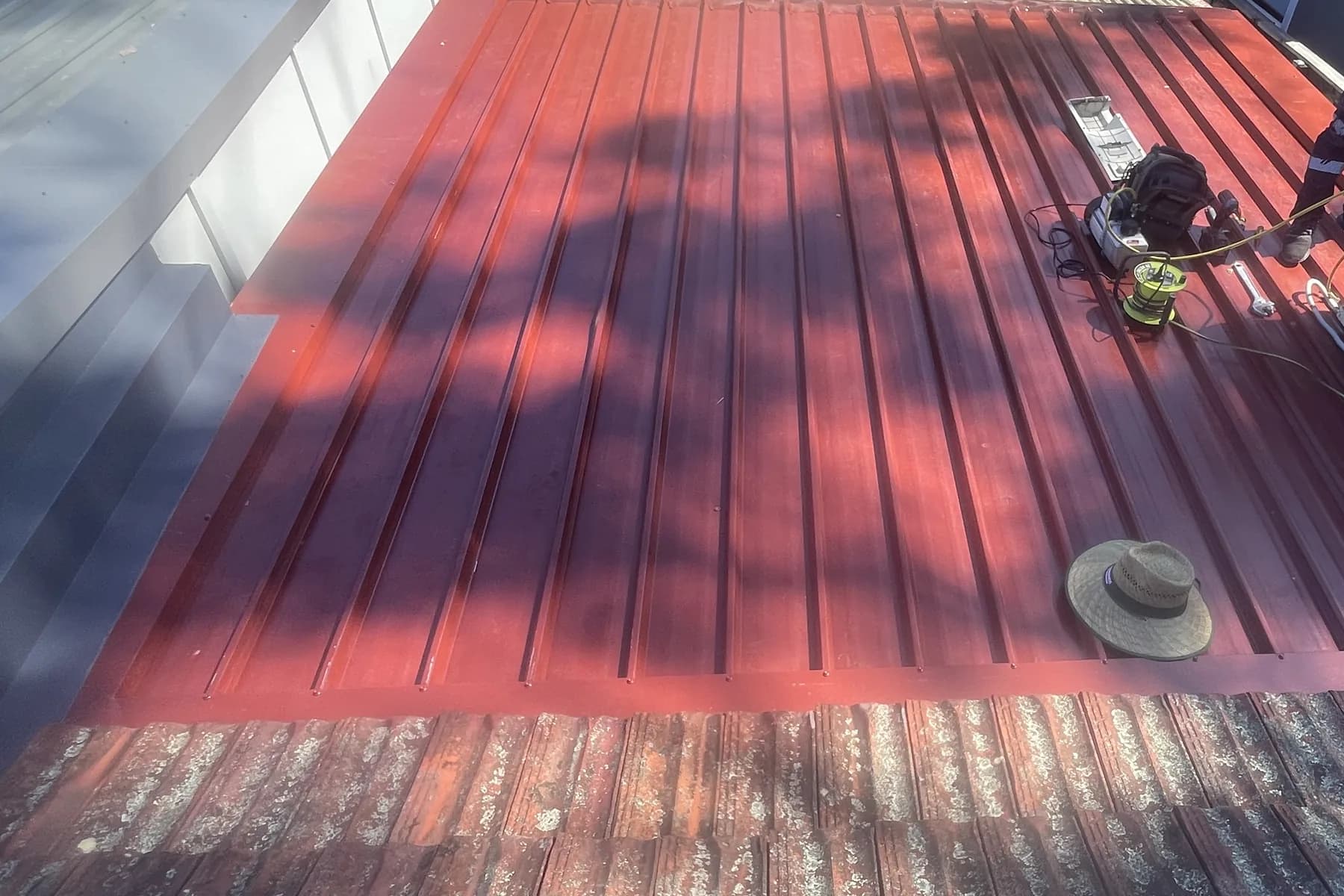

Metal roofing · Sydney
Metal Roof Replacement in Sydney
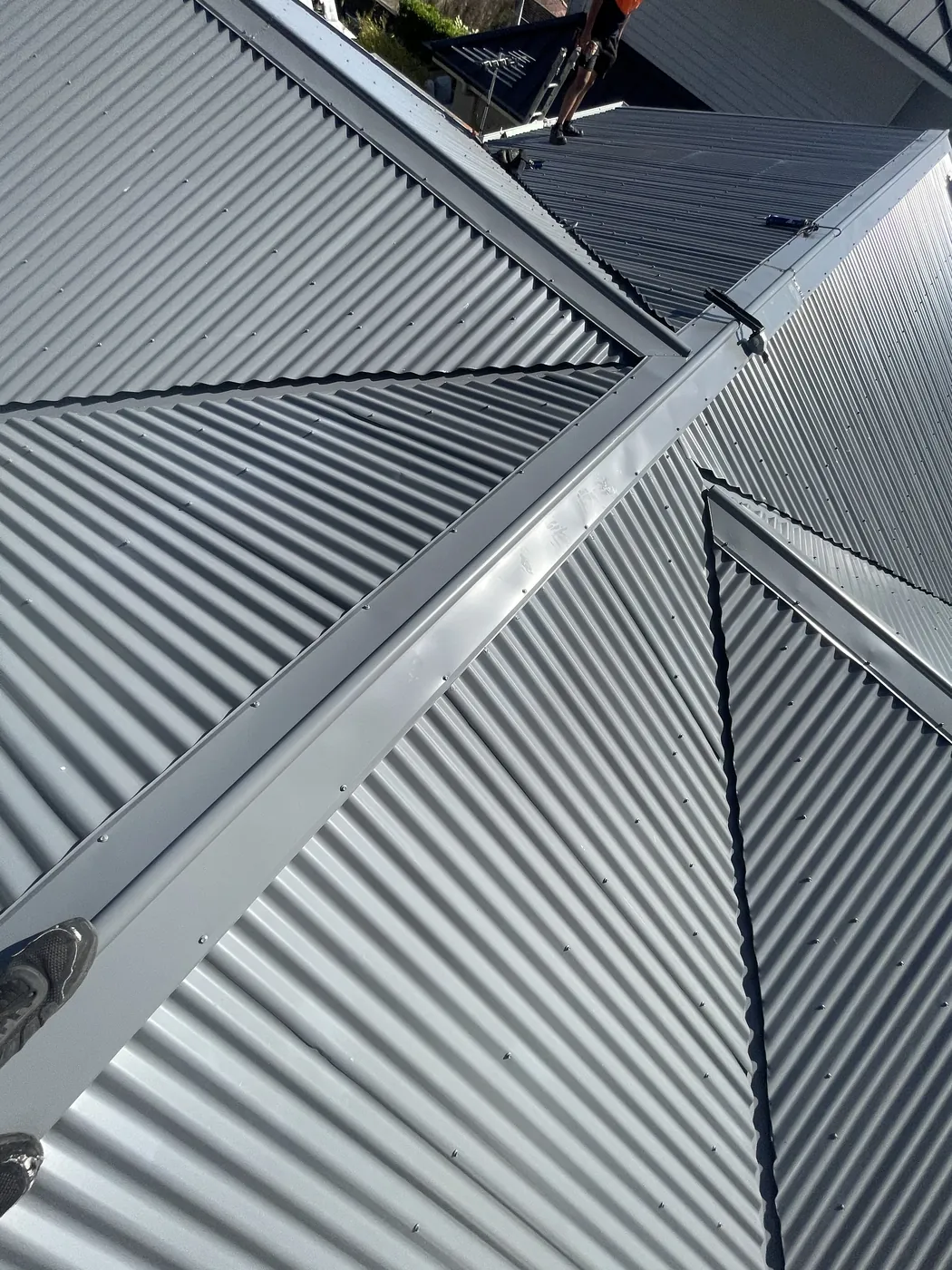
We take the old roof off and put a new metal one on. While it is open we check the timber underneath and replace anything that has rotted.
- Trade
- Certificate III roof plumber
- Work
- Re-roofs, new roofs, guttering
- Material
- Metal only. No tile.
- Area
- Sydney, west prioritised
What is included
What you are actually buying
Strip and dispose
The old roof comes off and leaves site. Tiles, sheet, old fixings and the debris that ends up in your gutters.
Battens replaced
Checked with the roof open and replaced where they have gone. This is the item most quotes leave vague.
New sheet and flashings
Sheet, ridge, valleys, barges and every penetration flashed properly rather than sealed.
Guttering, if you want it
The fascia is exposed and the roof edge is being remade, so it is the cheapest moment to do it.
Not included, deliberately
We work in metal only. No tile restoration, repointing or roof painting, no internal ceiling repairs, and no small leak chasing as a service. Job size is not a limit either way: there is no lower cut-off, and the crew scales up to roofs of around a thousand square metres.
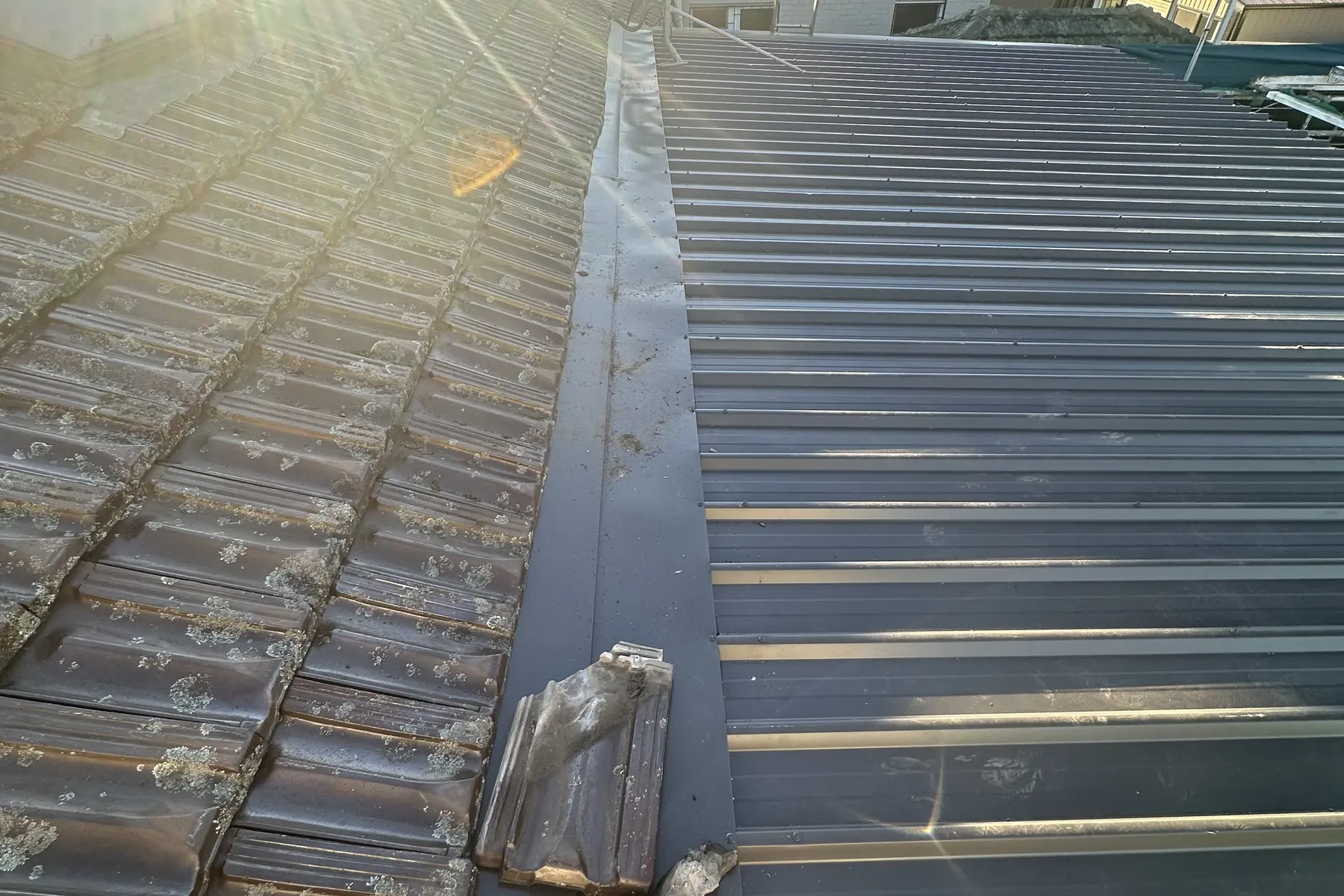
How it works
From the first phone call to the clean up
We measure it
On the roof where access allows, off satellite imagery where it does not. You get a figure for your roof, not a rate applied to a guess.
You get it in writing
Profile, coating range, colour, which battens are going, and what happens if the frame underneath is worse than it looked.
We strip in sections
Only as much comes off as goes back on the same day. Your house is never left open under a tarp overnight.
The frame gets looked at
The one moment anyone can see the battens and rafters. Anything found is discussed then, with the timber in front of you.
Sheet, flash, clean up
New sheet down, then ridge, valleys and penetrations. Gutters cleared of debris before we leave.
The detail
What you should know before you commit
A metal roof replacement means the old roof comes off and a new one goes on. Not a coat of paint over the top, not a rescrew, not a restoration. The sheets, the fixings, the flashings and usually some of the timber underneath are all replaced.
If you have been calling it a tin roof, this is the same job. Tin, iron, steel and Colorbond are all the same trade and the same crew, and the words people use for it change by generation rather than by material.
How you know your roof is due
A metal roof does not usually fail across the middle of a sheet. It fails at the edges and the fixings, because that is where water sits and where the metal has been cut.
The signs are specific enough to check yourself from the ground or a ladder.
Rust in the valleys
The valley is where two roof planes meet and every litre of water funnels through it. Rust there is the roof telling you it has run out of coating, and it is almost never worth patching on its own.
Rust rings around the screws
The washers under the screw heads perish long before the sheet does. Once they have gone, every screw hole is an open path into the roof cavity.
A ceiling stain that comes back
A stain that dries out and reappears each winter is an active leak, not old damage. Painting over it hides the evidence, not the water.
Sheets lifting or drumming in wind
Movement means fixings have lost their grip on the batten. On an older roof that is usually the timber failing rather than the screw.
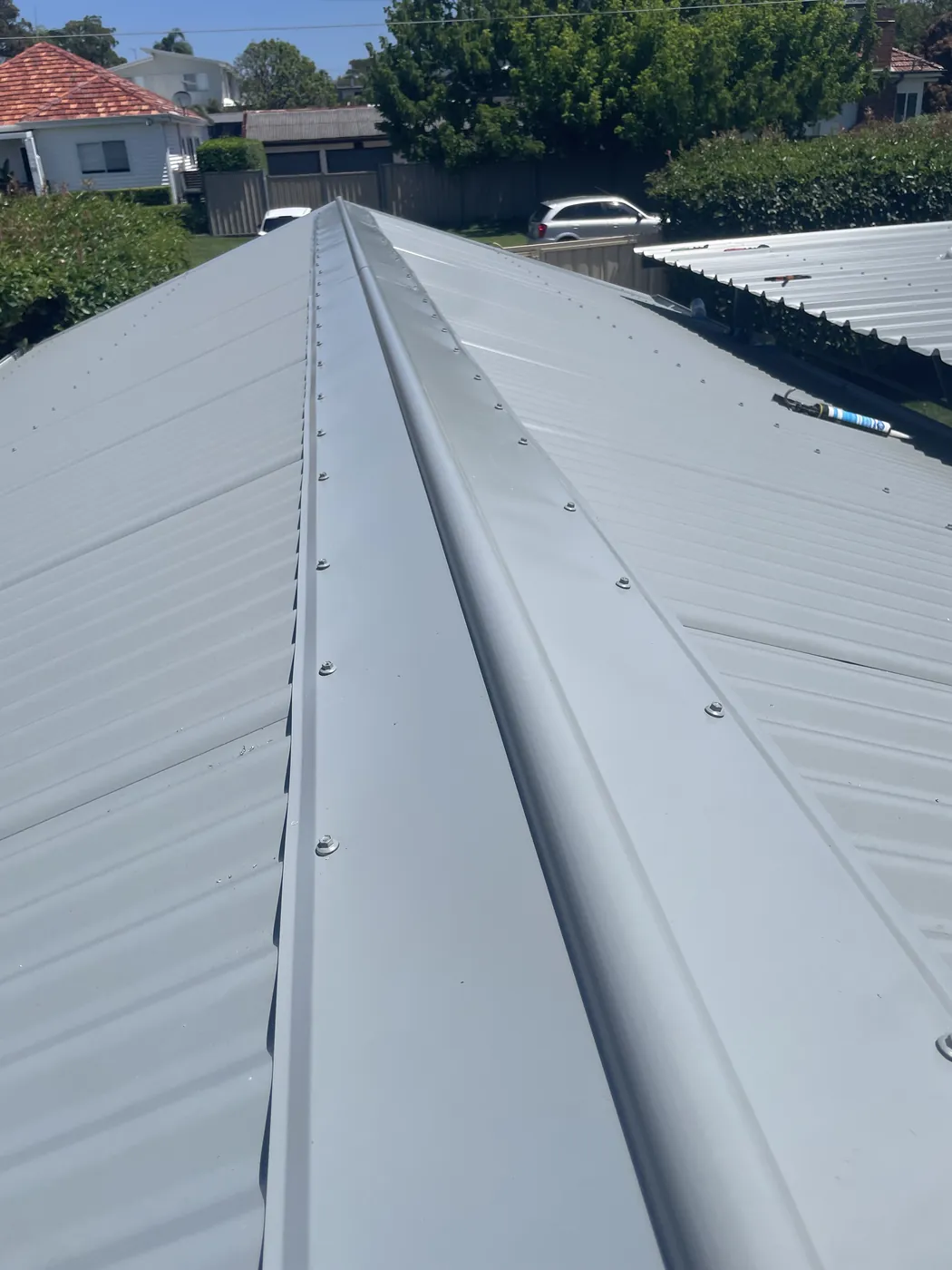
Choosing the profile and the colour
Two decisions matter and everything else is detail. The profile is the shape of the sheet, and the colour is the colour.
Profile is the one with consequences. It determines the minimum roof pitch the sheet can be laid at, how the roof reads from the street, and whether the fixings are visible.
Colour is mostly taste, with one practical exception: a darker roof absorbs more heat, and on a house with thin ceiling insulation that is felt indoors through a western Sydney summer.
Corrugated
The rounded traditional profile. It suits older houses and it is what most people picture when they think of a tin roof.
Trapezoidal ribbed
Squared ribs with a flat pan between them. It handles a lower pitch than corrugated and reads as more contemporary.
Concealed fix
The clips sit under the sheet so there are no screw heads on show. It costs more and is used where the roof is very visible or very low pitched.
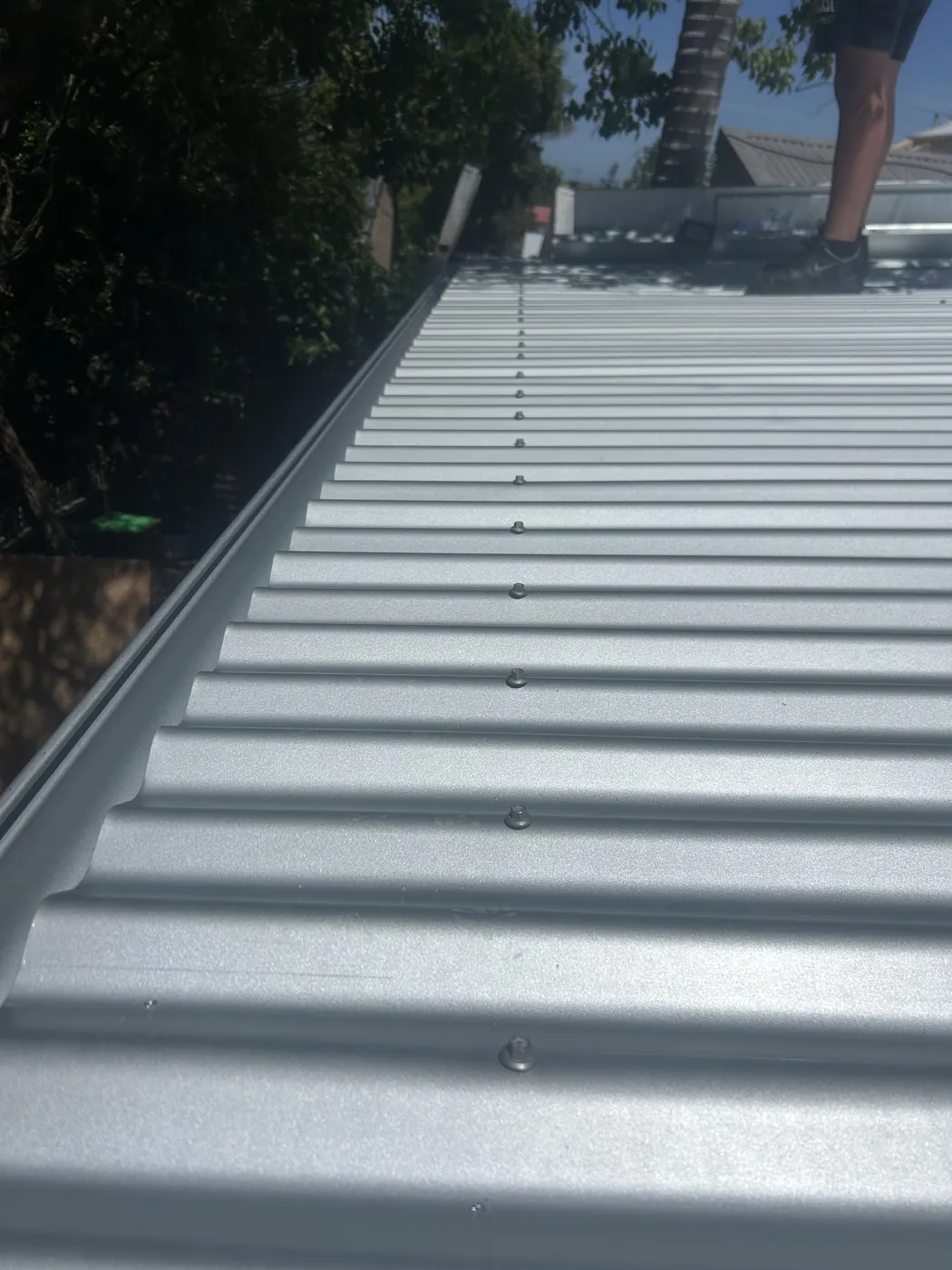
Questions worth asking any roofer
These take about a minute on the phone and they separate a considered quote from a number.
What licence do you hold?
Not how long they have been roofing. The licence is checkable and it tells you which work they are entitled to carry out.
How do you sequence the strip?
You want to hear that the roof is opened in sections. If the answer involves tarps overnight, ask what happens in a storm.
What is under the sheet?
Sarking or an insulation blanket, or nothing. On a metal roof over a heated house, nothing means condensation.
What if the battens are gone?
Concealed timber damage is unpredictable, so the useful answer is a method and a rate, not a reassurance that it will not happen.
Who does the guttering?
If it is somebody else, you have two trades and a gap between them where responsibility for a leak lives.
Want this priced for your roof rather than in general?
Repair, rescrew or replace
Three different jobs get called the same thing, and the right one depends on what has actually failed rather than on the age of the roof.
The table below is the way we think about it on the phone before anyone comes out.
| What you are seeing | Most likely answer | Why |
|---|---|---|
| One leak, roof otherwise sound | Repair | A single failure point is a flashing or a fixing, not a roof at the end of its life. |
| Rust rings on most screw heads, sheet still sound | Rescrew | The washers have perished. The steel has life left and replacing fixings is far cheaper than replacing sheet. |
| Rust through the valleys | Replace | Valleys carry all the water. Once they have gone the rest of the roof is usually the same age and heading the same way. |
| Sheets lifting or drumming in wind | Inspect the battens | Movement is usually the timber releasing the fixing rather than the fixing failing. That is only visible with the roof open. |
| Ceiling stain returning each winter | Investigate before quoting | An active leak with an unknown source. Replacing a roof to chase one leak is the wrong order of operations. |
| Tile roof, capping repointed once already | Consider converting | The next repointing is the second in a repeating cycle. That is the moment a conversion usually starts to make sense. |
The honest version
Two of the six rows above are not a re-roof. We would rather tell you that on the phone than quote you for work you do not need, because the alternative is a job we should not have taken and a customer who works it out later.
What a written quote should contain
If you are comparing two quotes, compare what is listed rather than which total is smaller. A quote with nothing itemised is not cheaper, it is just less specific.
This is the checklist we work to, and it is a reasonable thing to hold any roofer to.
| Item | What it should say | Why it matters |
|---|---|---|
| Profile | The specific sheet profile | It sets the minimum pitch and how the roof looks. A brand name alone does not. |
| Coating range and colour | Both, by name | The coating range is a specification requirement near salt water, not a preference. |
| Battens | Which are being replaced, at what spacing | New battens are normal on a re-roof. If they are excluded, that should be visible. |
| Sarking or blanket | Present or absent | Absent means condensation on the underside of the sheet in cold weather. |
| Flashings | Formed flashings at junctions and penetrations | Sealant in place of a flashing has a service life. A flashing does not. |
| Guttering | In or out of scope | Cheapest with the roof off, expensive as a return visit. |
| Disposal | Removal of the old roof | Real weight, real tipping cost. It should not be invisible. |
| Concealed damage | A method and a rate | Nobody can see rafters until the roof is off. Agreeing the process beforehand prevents the argument. |
What fails first, and what each failure means
Roofs fail in a predictable order, which is why an inspection follows a fixed sequence rather than starting with whatever is easiest to see.
This is that sequence, with what each finding actually decides.
| Checked | What is being looked for | What it decides |
|---|---|---|
| Valleys | Rust in the folded channel, debris held against the steel | Rust here means end of life. It is the single most decisive finding on a metal roof. |
| Fixings | Rust rings radiating from screw heads | Rust at fixings with sound valleys points at a rescrew rather than a replacement. |
| Flashings and penetrations | Sealant where a formed flashing should be, lifting aprons | A leak here is a repair. It is the most common cause of a leak on an otherwise good roof. |
| Ridge and barges | Capping lifting, loose fixings, cracked pointing on tile | On tile it says where the roof is in its repointing cycle. |
| The sheet | Cut ends, dents, corrosion spreading, contact with other metals | Checked late. The middle of a sheet is the best protected part of the roof. |
| Gutters and fascia | Rust at the back edge, sag, standing water, downpipe count | Often a job in its own right, and always cheaper done with the roof off. |
| Underside, from the manhole | Daylight, stains on the sarking, batten condition | The only view of the timber before the roof comes off. |
Ask which item drove the answer
If somebody recommends a full replacement, it is entirely reasonable to ask which of those seven findings led there. A good answer is specific and takes about thirty seconds. Vagueness at that question is worth noticing.
Common questions
Full re-roof: common questions
How long does a metal roof replacement take?
A standard Sydney house is typically a few days of work, weather permitting. The variables are the size of the roof, how complicated the shape is, and how much timber underneath needs replacing once the old roof is off.
Can you work in the rain?
No. Roof replacement is external work and an open roof in rain is a flooded house, so wet weather moves the job rather than pushing through it. This is why we strip in sections and never leave a roof open overnight.
Do I need to move out?
No. It is noisy and there will be people walking over your ceiling, but the house stays weathertight because only the section being replaced is ever open.
What if the timber underneath is rotten?
You will be told while the roof is open and the timber is visible. Battens are a normal part of a re-roof and are usually included, but structural rafter damage is a separate conversation and should be quoted separately rather than absorbed quietly.
Do you replace the gutters at the same time?
It is usually the sensible time to do it. The gutters are accessible, the fascia is exposed, and new guttering on an old roof is money spent in the wrong order.
Do I need to be home while the roof is being replaced?
Not for the whole job, though somebody should be contactable. The one moment it matters is when the roof is open and the timber underneath is visible, because that is when any concealed damage gets discussed and decided.
What happens to my ceiling insulation?
Nothing, on a like-for-like metal re-roof. It sits below the roof space and is not disturbed. If the ceiling insulation is thin, a re-roof is a convenient time to deal with it, but it is separate work.
Can you match my existing roof if only part of it needs replacing?
Sometimes. Profiles are usually still available, but a sheet that has weathered for twenty years will not match new steel exactly, and the difference is more obvious than people expect.
Will my solar panels have to come off?
Yes. They come off before the roof does and go back on afterwards, which is a separate trade. It is worth confirming who is arranging that before the job is booked.
What happens to the old roof?
It comes off site. Removal and disposal is real weight and real tipping cost, and it should appear in a quote as a named item rather than disappearing into a rate.
Do you provide a warranty?
There are two, and they come from different places. The manufacturer warrants the sheet, and how long for depends on the product, the coating range and how close you are to salt water. We warrant our own workmanship for up to 15 years, in writing, which is well beyond the seven to ten most roof plumbers offer. Ask any roofer for the second one in writing, and ask whether it covers the flashings.
Other services
The rest of what we do

Tile to metal
Swap a tile roof for steel. The tiles come off, we check the frame is right for the change, and the new roof goes on in sheet.

Guttering
New gutters, downpipes and fascia, either with a new roof or on their own.

COLORBOND
COLORBOND steel in the colour and profile you choose, laid the way the manufacturer says it has to be.
Next step
Get your roof measured properly
On the roof where we can get to it, off satellite imagery where access is awkward. You get a figure for your roof, not a rate applied to a guess.