
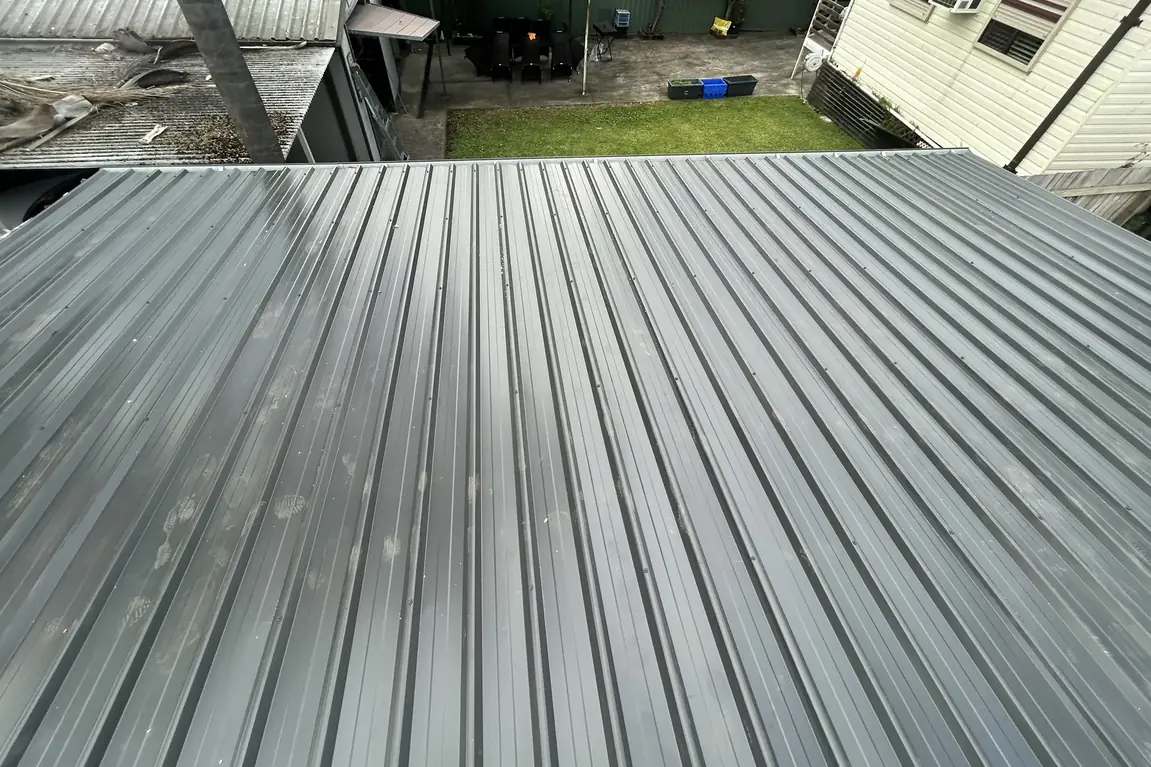
Colorbond Roof Replacement in Sydney
Colorbond roof replacement in Sydney means new pre-painted steel in the colour and profile you choose, laid by a roof plumber to BlueScope's published installation instructions.
- Our roof plumber holds a Certificate III in Roof Plumbing.
- Up to 15 years on our workmanship, in writing.
- We cover all of Sydney and get to the west first.
What the job includes
Profile matched to your pitch
Each sheet has a minimum roof slope, called the pitch, and laying it flatter voids the warranty. We check it against your roof before quoting.
Coating range for your location
The standard coating inland, and the heavier marine coating near salt water, where the manufacturer requires it.
Matched fixings and flashings
No point specifying marine grade sheet then screwing it down with fixings that rust out first.
Installed to the published spec
Fixing type, spacing, lap direction and flashing detail. Most metal roof failures are installation failures.
Any size of job
There is no lower cut-off, and the crew scales up to roofs of around a thousand square metres.
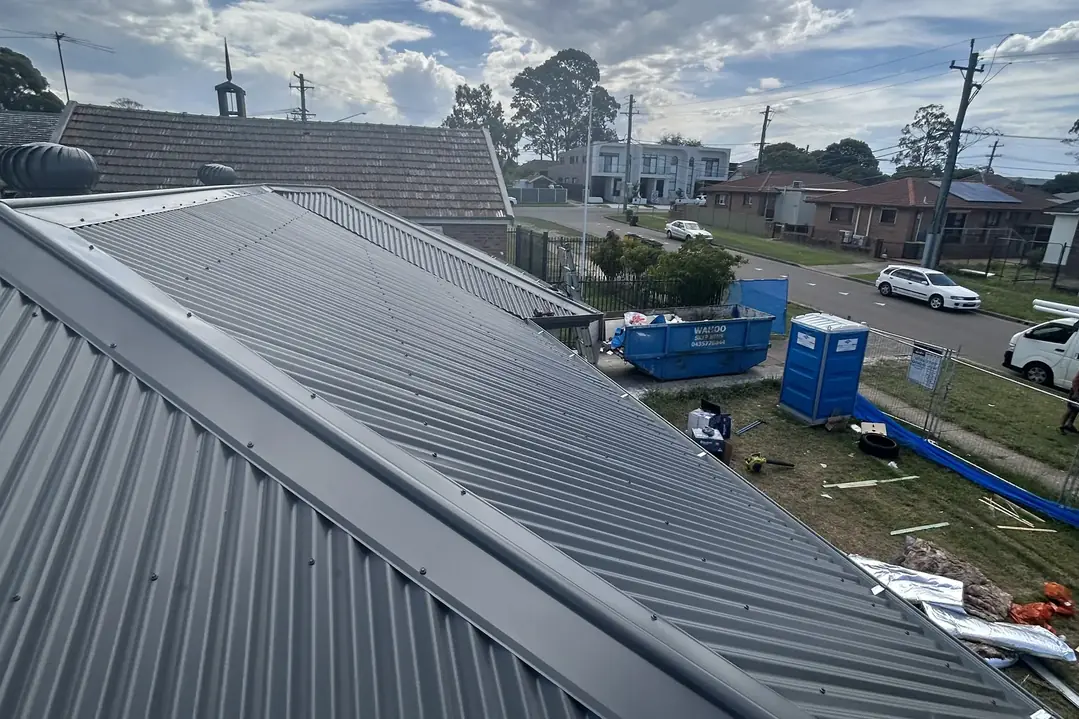
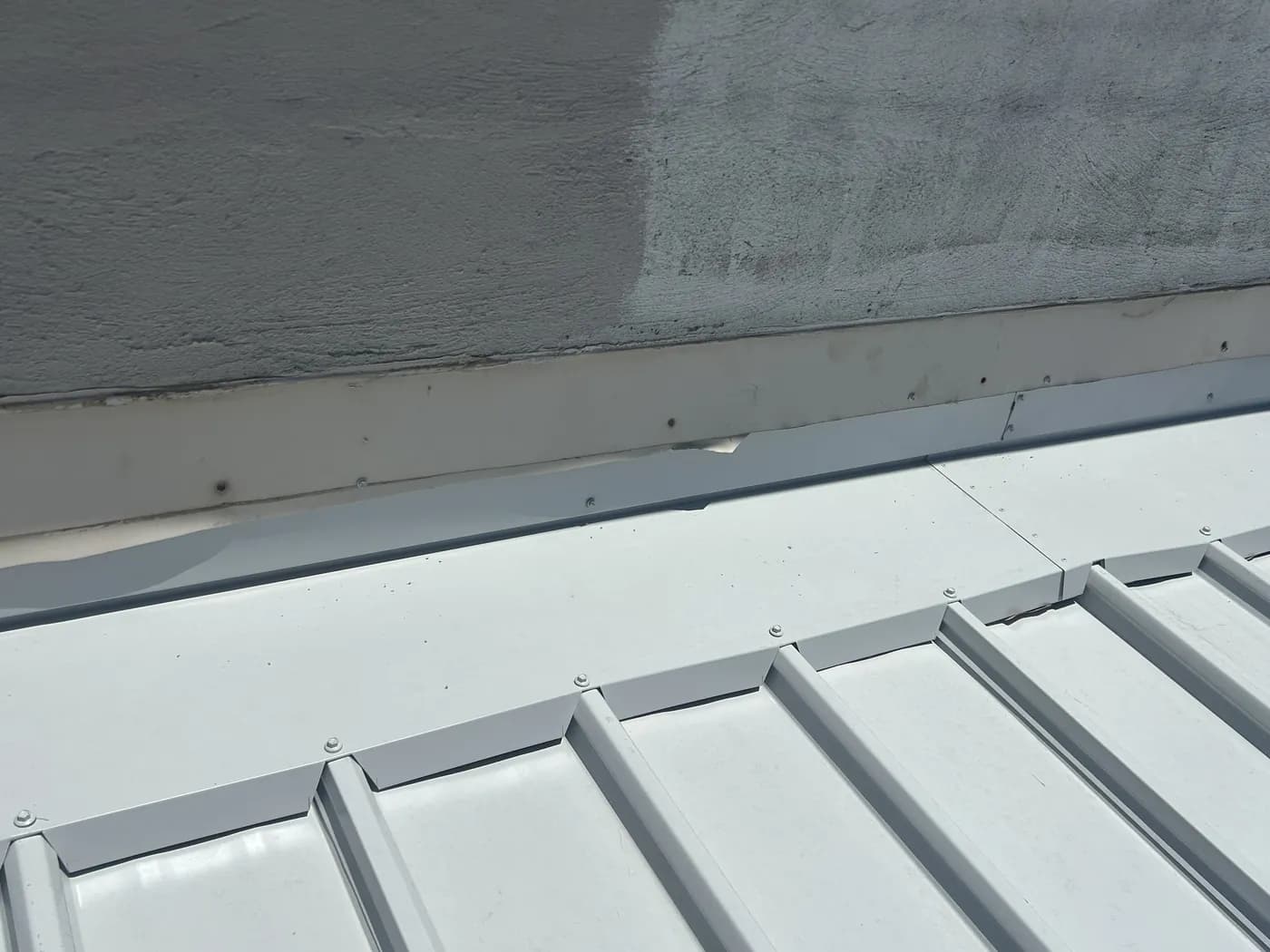
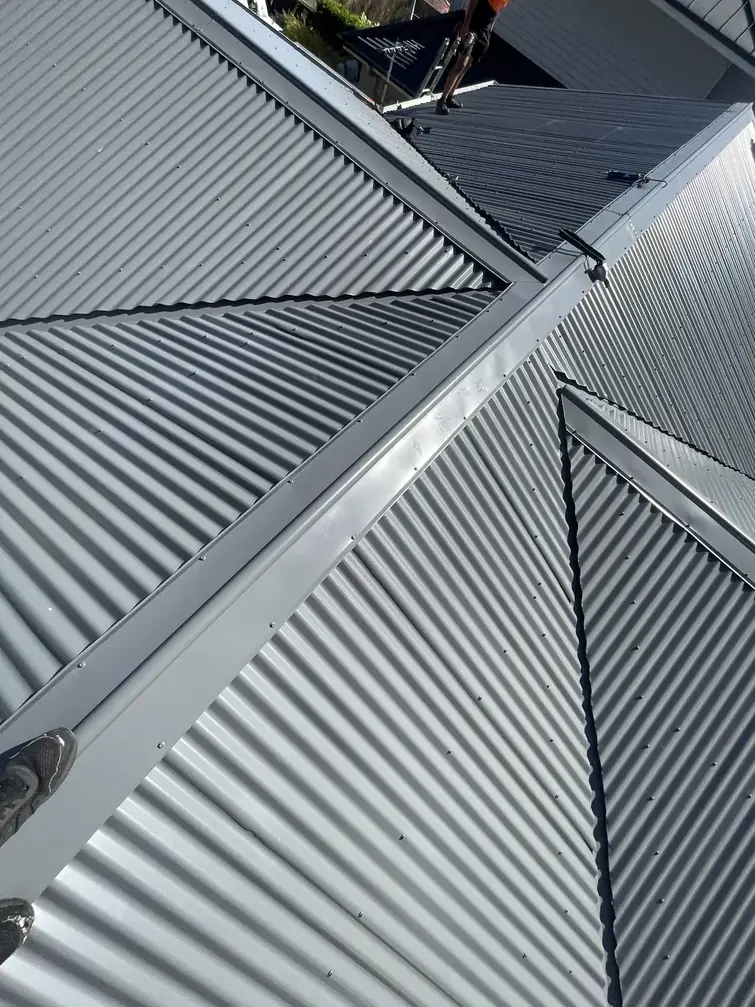
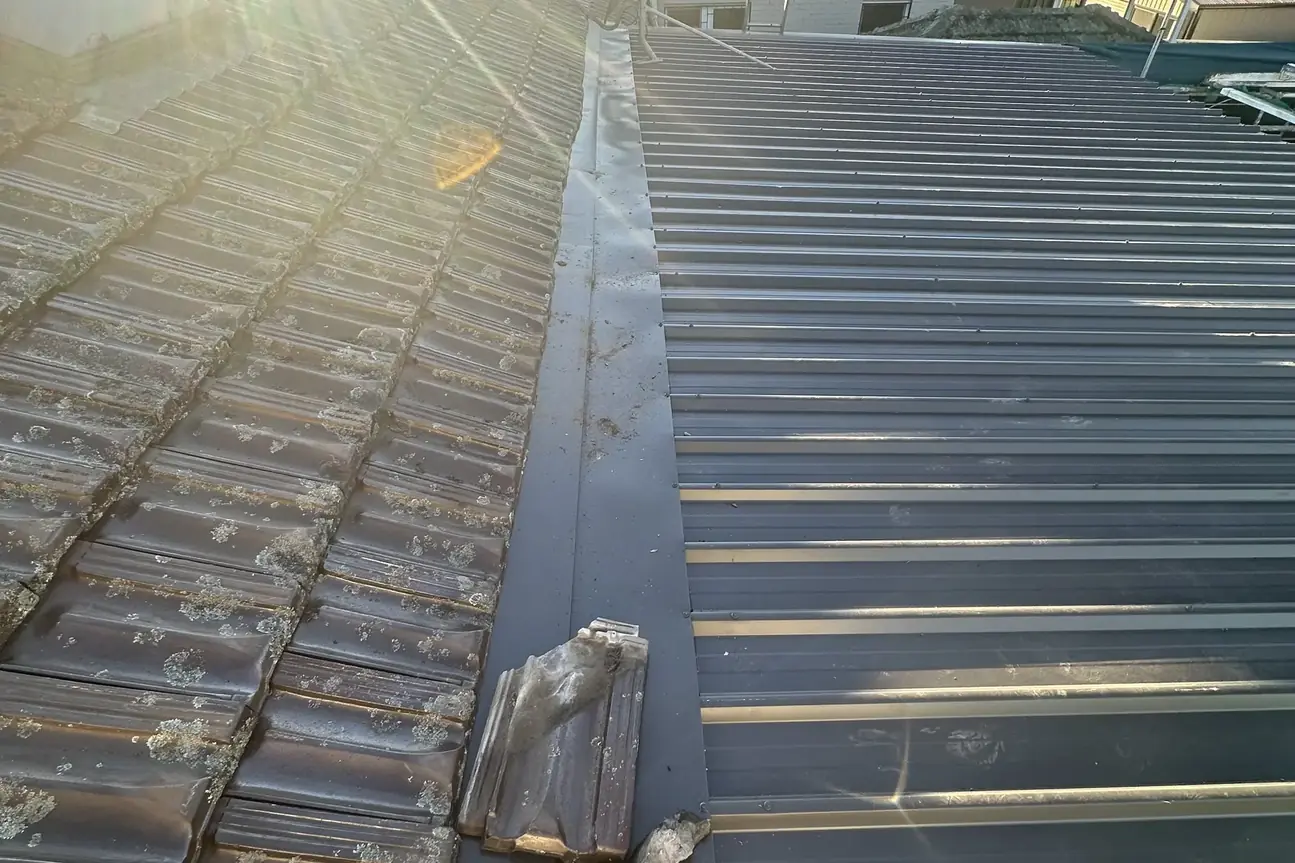
A few of our roofs
From the first phone call to the clean up
1. We measure and check pitch
Which profiles your roof can take, before you are shown a colour chart.
2. Profile, coating range, colour
All three named in the quote. Not a brand name on its own.
3. Old roof off, in sections
We plan each day so the part we strip is covered again before we leave.
4. Sheet laid to specification
Screws go through the raised ribs, sheets overlap so the wind cannot push water under them, and valleys are left room to move.
5. Roof left clean
The steel filings left from cutting, called swarf, rust wherever they land, including on your new roof, so we sweep them off.
What you should know before you commit
Colorbond is BlueScope's pre-painted steel, and it is what most Sydney metal roofs are made of. We install it. We are not part of BlueScope.
You choose two things: the profile and the colour. The colour can be painted over later. The profile cannot be changed without a new roof.
Colorbond and Zincalume are not the same thing
Both are BlueScope products and both end up on roofs, so the names get used interchangeably. They are different products.
Zincalume is the coated steel itself, unpainted, with a metallic finish. Colorbond is the pre-painted product built on that coated steel, and it is what people mean when they talk about a coloured steel roof.
You can roof a house in either. Zincalume is still used on sheds, outbuildings and some contemporary houses where the metallic look is wanted.
Choosing Colorbond for a house that is tiled now makes it a tile to metal conversion, which has its own checks before a quote.
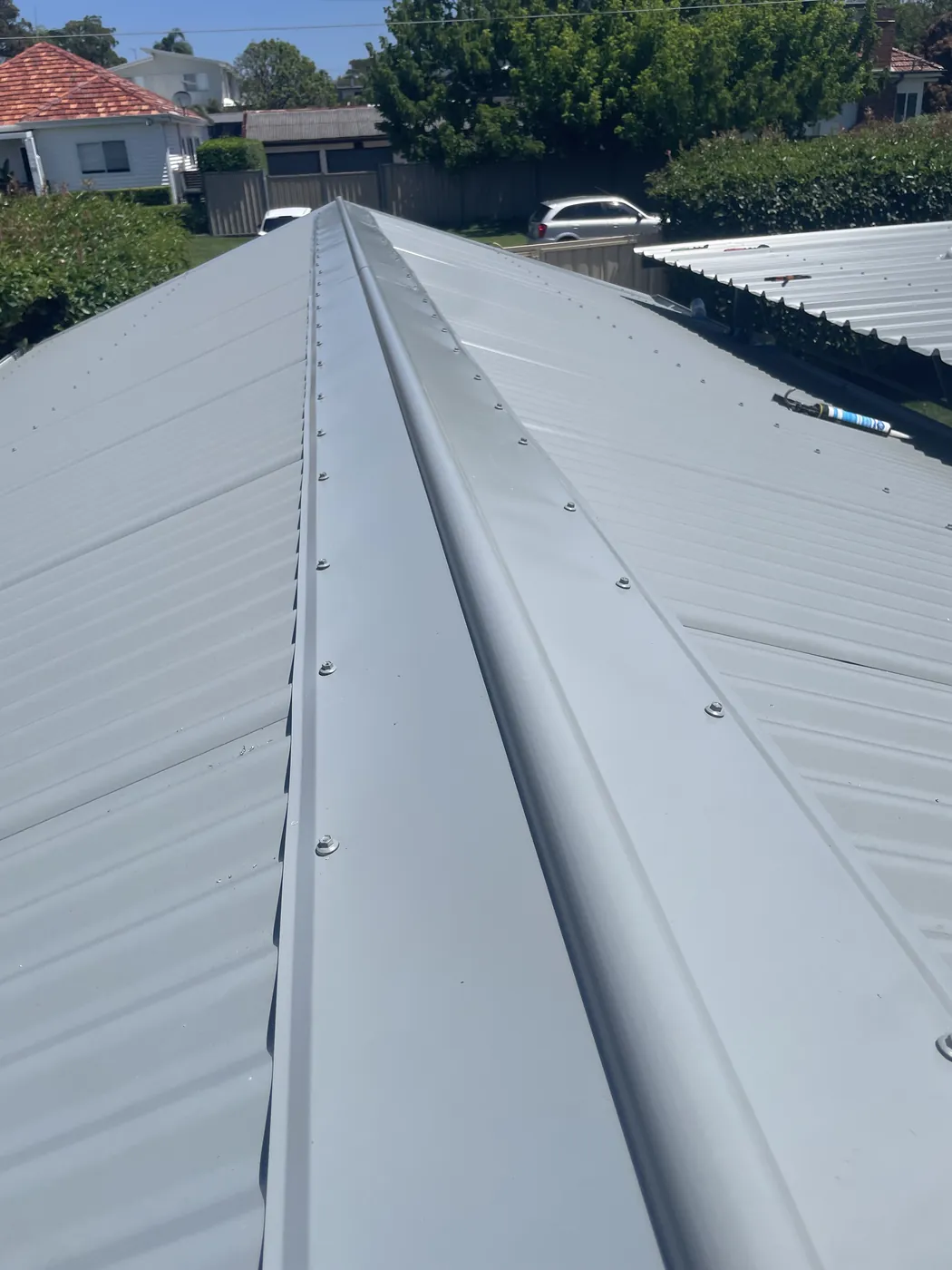
What maintenance a steel roof needs
Considerably less than tile, but not none, and the difference between the two is worth knowing before you assume a metal roof is maintenance free.
When the washers under the screws do perish, a rescrew is the maintenance job, not a new roof.
Keep the valleys and gutters clear
Debris holds water against the steel. This is the single highest value thing you can do and it matters far more under trees.
Wash the sheltered areas
Rain washes most of a roof. Areas under eaves and behind parapets do not get rinsed, so salt and grime accumulate there. That is where corrosion starts on a coastal roof.
Look at the fixings every few years
Rust rings around screw heads are the earliest visible warning that a roof is ageing, and a rescrew is far cheaper than a replacement.
Do not walk on it unnecessarily
Every dent is a place where water now sits and where the coating may have been broken.
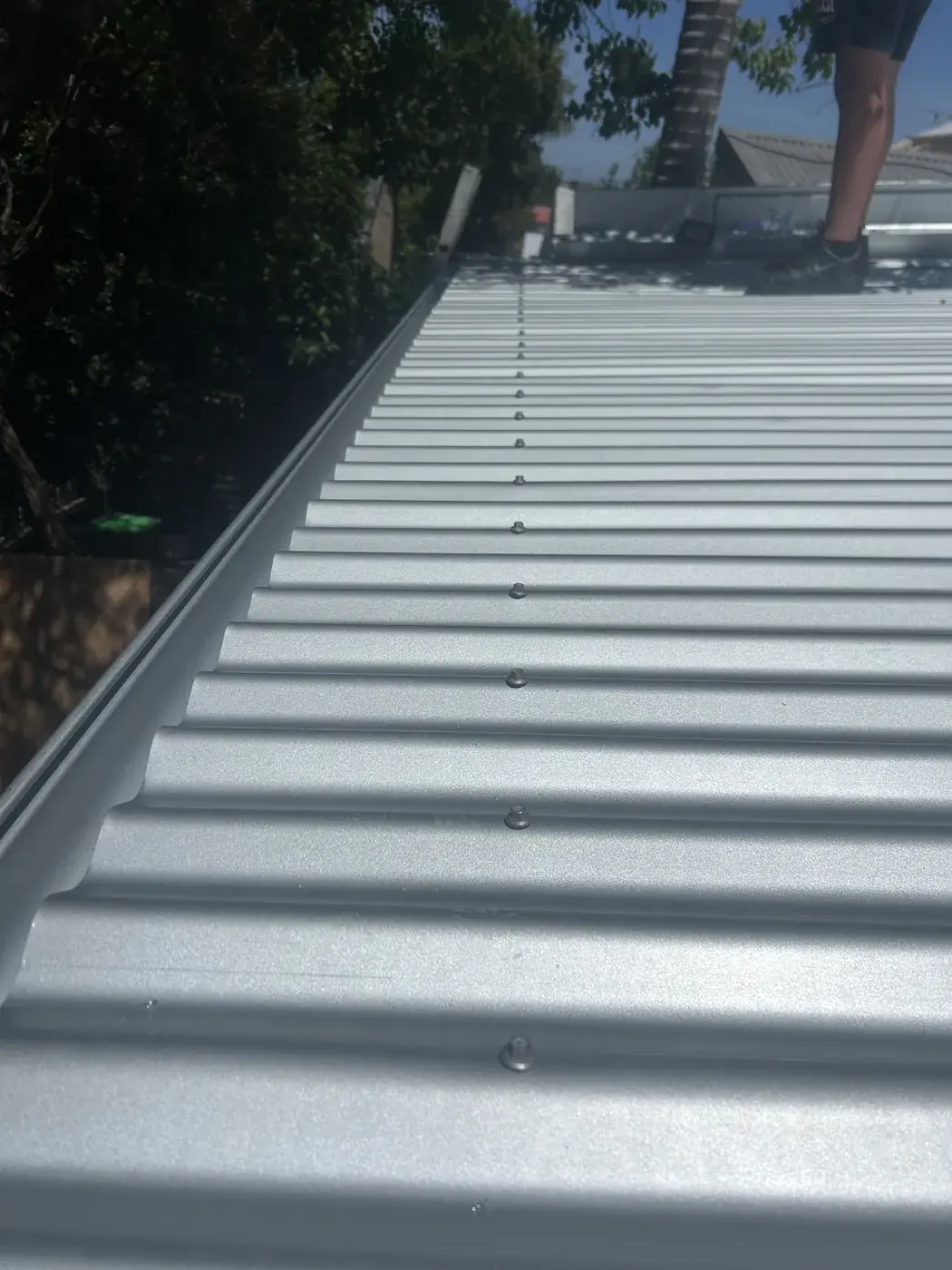
The profiles, side by side
Profile is the decision with real consequences, so it is worth understanding before you are asked to pick one from a brochure.
| Profile type | Fixings | Pitch tolerance | Reads as |
|---|---|---|---|
| Corrugated | Exposed, through the crest | Needs more pitch than the ribbed profiles | Traditional. Suits older houses. |
| Trapezoidal ribbed | Exposed, through the rib | Handles lower pitch than corrugated | Contemporary. Common on newer builds. |
| Concealed fix | Clipped under the sheet, none visible | Lowest of the common options | Modern look with long, clean lines. |
Confirm the minimum pitch against the product
The manufacturer publishes a minimum pitch for each profile, and laying a sheet flatter than that voids the warranty. We check it against your roof before quoting.
Want this priced for your roof rather than in general?
How far you are from salt water changes the specification
How close you are to the sea changes the roof more than anything else.
BlueScope publishes distance-from-coast guidance for its coating ranges, and there is a heavier duty range specified for marine environments. The standard range is not specified for very close proximity to breaking surf.
The practical consequence reaches past the sheet. Fixings, flashings and brackets all have to suit the environment, because the life of the roof is set by whichever component corrodes first.
| Component | Well inland | Near the coast |
|---|---|---|
| Sheet coating range | Standard range is the normal specification. | Heavier duty marine range, per the manufacturer's distance guidance. |
| Fixings | Standard fixings suited to the sheet. | Matched to the sheet. Mismatched fixings fail first and take the roof with them. |
| Flashings and valleys | Standard. | Same coating as the sheet, so nothing rusts out first. |
| Washing | Rain does most of it. | Sheltered areas that rain never rinses need washing, or salt accumulates. |
Where installation quality shows
Most metal roof failures come from how the roof was put on, not the steel, and the same few mistakes come up.
None of them is visible from the ground, and none shows up for several years.
The rules that prevent these faults are written down in AS 1562.1, the standard for metal roof cladding, and the SA HB 39 installation code.
| The mistake | What happens |
|---|---|
| Screws in the pan instead of the rib | The fixing sits in the path of the water rather than above it. Every screw becomes a potential entry point. |
| Laps running against the prevailing weather | Wind drives water back up the lap. It leaks only in certain storms, which makes it hard to diagnose. |
| Valleys cut too tight | No room for the sheet to move with temperature. The valley works itself loose or splits. |
| Silicone in place of a formed flashing | Silicone breaks down within a few years, and then the roof leaks. |
| Swarf left on the roof | Steel filings from cutting rust where they land, staining and pitting a brand new sheet. |
| Fixings overtightened | The washer is crushed and stops sealing, which is the same failure as a perished washer, arriving decades early. |
What changes the price
Read the cost guideThe area, and the shape
Two roofs the same size can cost different amounts. Hips (the sloping edges where two roof faces meet), valleys and dormer windows mean more cutting and more flashing, and that is where the hours go.
What is under the sheet
Rotten battens, the timber strips the sheets are screwed to, get replaced, and nobody knows how many until the old roof is off. Our quote says how they are priced.
Getting on and off it
A single storey with a driveway beside it is a different job to a three storey terrace on a shared wall. Access decides scaffold, and scaffold is real money.
The profile and the coating
The shape of the sheet (corrugated, square-ribbed or standing seam) and the grade of coating you pick both change the sheet price. Standing seam is the dearest and is not always the right answer.
Common questions
Colorbond: common questions
Is Colorbond the same as Zincalume?
No. Zincalume is the unpainted coated steel, and Colorbond is the pre-painted product built on it. Both are BlueScope products and both are used on roofs, but Colorbond is what people mean when they talk about a coloured steel roof.
How long does a Colorbond roof last?
Manufacturer warranty terms depend on the product, the coating range and how close the roof is to the coast, so check the warranty for the specific product being installed. Installation to specification is a condition of most of them.
Which profile is best?
The one that suits your roof pitch and the look of the house. Corrugated suits older homes, ribbed profiles handle lower pitches, and concealed fix is used where no exposed fixings are wanted.
Does a dark roof make the house hotter?
It absorbs more heat than a light one, and whether you feel that indoors depends almost entirely on the insulation in the ceiling. If you are choosing a dark colour, treat the insulation as part of the same decision.
Can I get any colour in any profile?
No. Colour availability varies by profile and by coating range, so the two decisions interact. Confirm the combination is available before settling on it.
Does the colour fade?
Slowly. A coated finish holds colour far better than concrete tile, which fades and grows moss, particularly on the south side of a roof.
Do I need to wash a metal roof?
Rain washes most of it. The areas that matter are the ones rain never reaches, under eaves and behind parapets, where salt and grime accumulate. That matters most near the coast.
Can I paint an existing metal roof instead of replacing it?
Painting changes the appearance and can slow surface deterioration. It does not restore a perished washer or a rusted valley, which is where roofs fail.
What is the difference between exposed fix and concealed fix?
Exposed fix screws through the sheet, which is the normal residential method. Concealed fix clips under the sheet so no fixings are visible, costs more, and generally tolerates a lower pitch.
Are the fixings really that important?
They are the shortest lived part of most roofs. The washer under the head perishes long before the steel does, and on a coastal roof mismatched fixings will fail first and take the roof with them.
Can I see the colour on a real roof before deciding?
Ask for one nearby. A small sample under showroom lights looks very different from a whole roof under a Sydney sky.
Where we work
We cover all of Sydney and get to the west first.
The rest of what we do
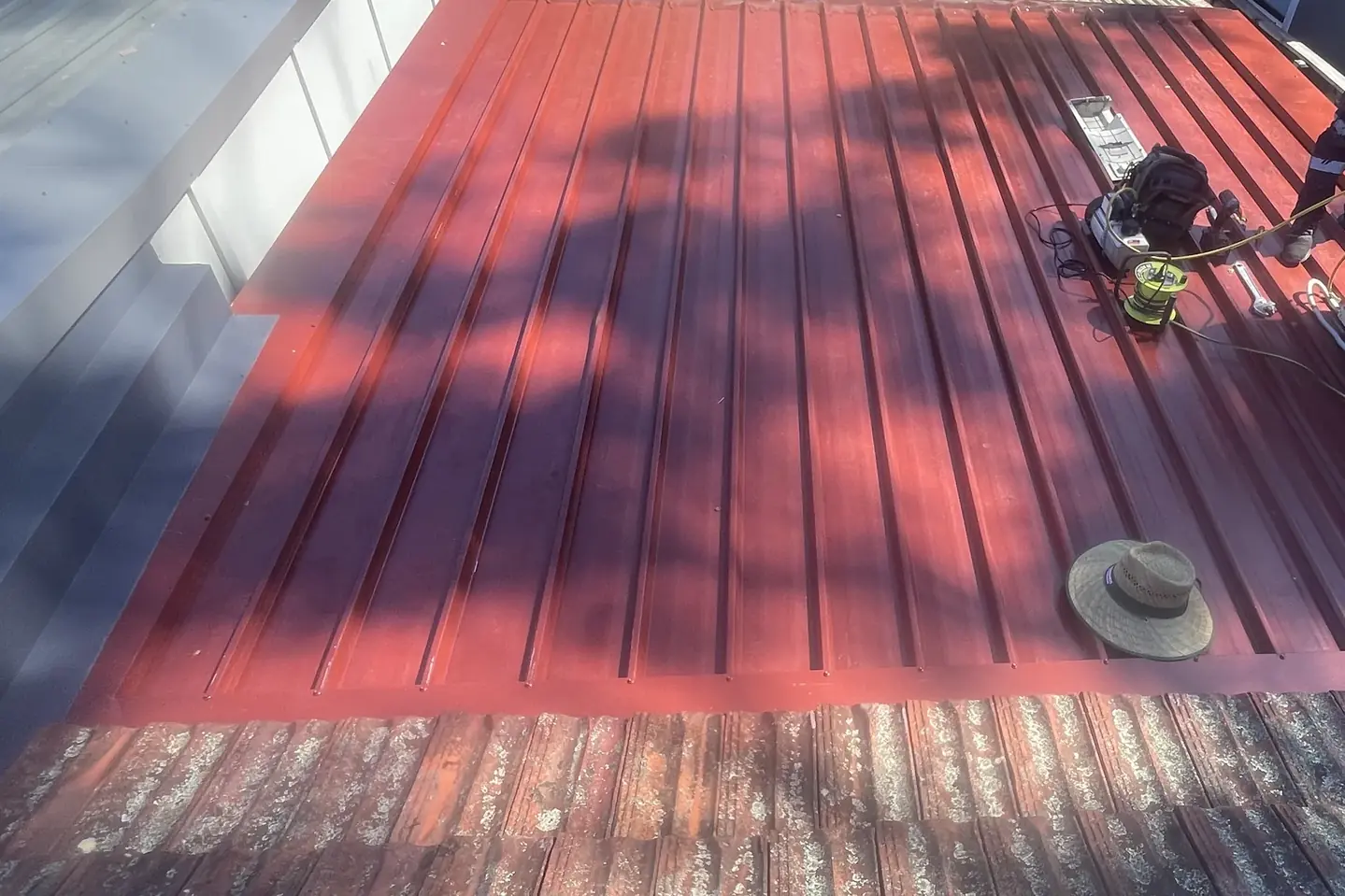
Full re-roof
We take the old roof off and put a new metal one on. While it is open we check the timber underneath and replace anything that has rotted.
Full re-roof →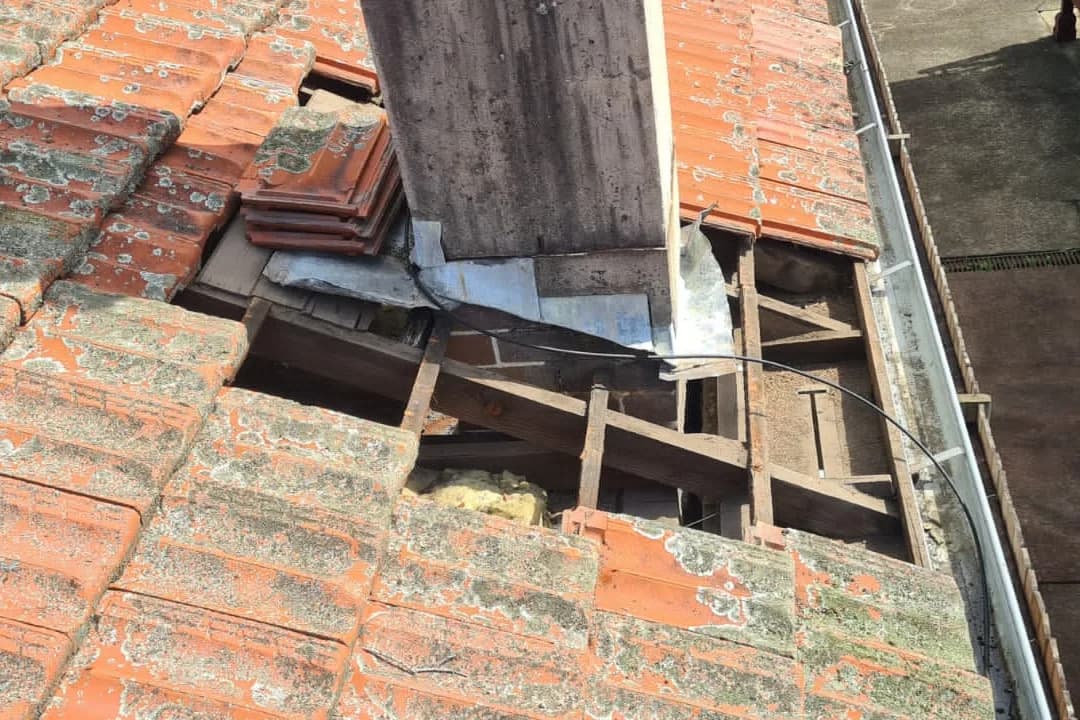
Tile to metal
Swap a tile roof for steel. The tiles come off, we check the frame is right for the change, and the new roof goes on in sheet.
Tile to metal →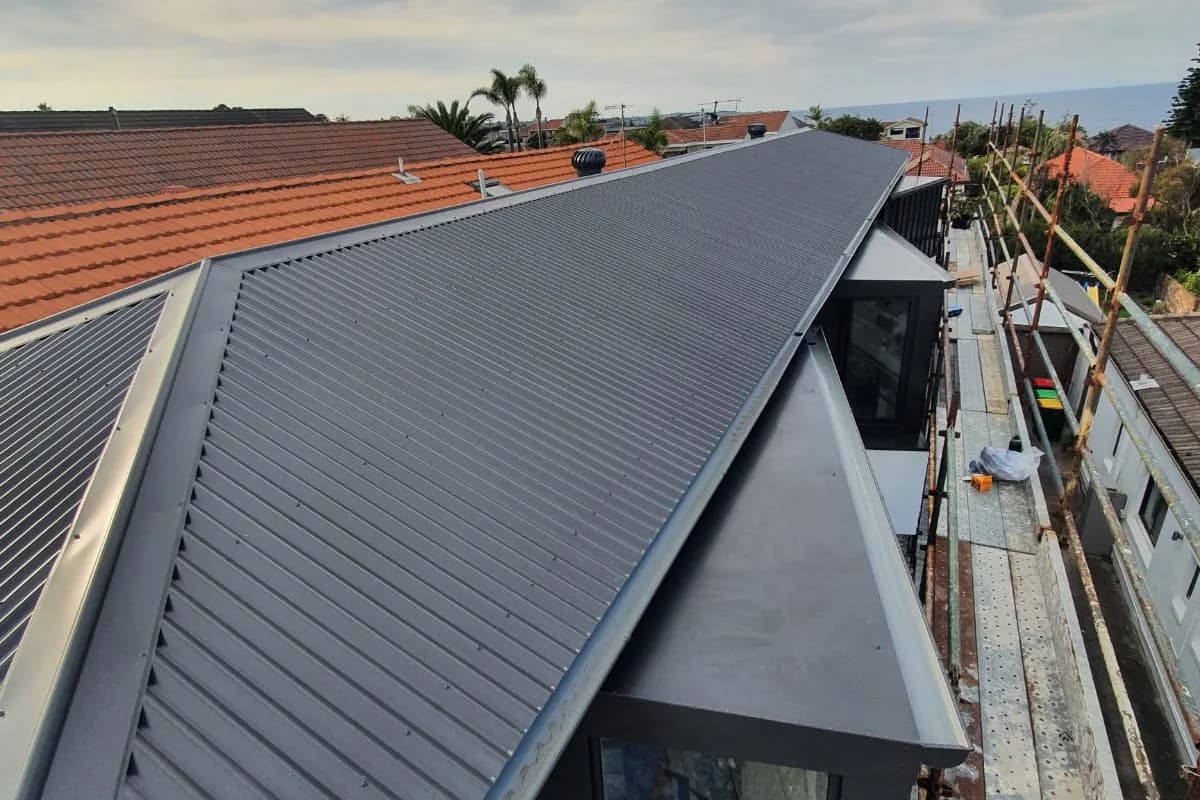
New roofs
A brand new roof on an extension, a rebuild or a new house. We start at the bare frame and finish the lot.
New roofs →Get your roof measured
On the roof where we can get to it, off satellite imagery where access is awkward. We measure your roof and price that roof.