
Metal roofing · Sydney
Standing Seam Roofing in Sydney
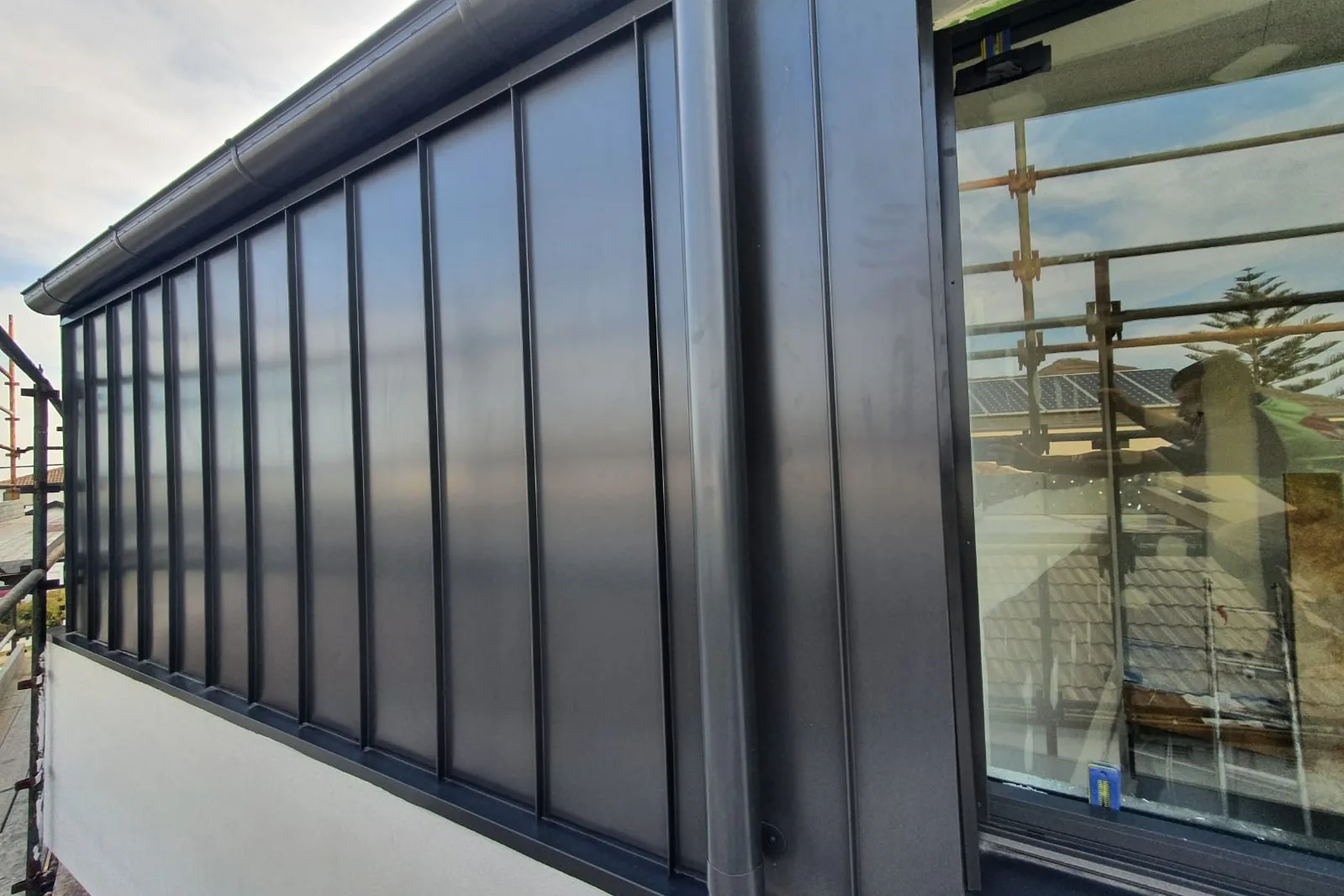
A sharper look with no screws showing on the roof. The panels join along a raised seam instead.
- Trade
- Certificate III roof plumber
- Work
- Re-roofs, new roofs, guttering
- Material
- Metal only. No tile.
- Area
- Sydney, west prioritised
What is included
What you are actually buying
Concealed fix, no exposed screws
The panels clip to concealed clips and the seam closes over them. Nothing penetrates the weather surface.
Roofs and wall cladding
The same panel runs vertically as cladding, which is why standing seam buildings read as one continuous surface.
Low pitches
A properly formed seam works at pitches where a screwed corrugated sheet is at the edge of what it can do.
Flashings made to suit
There is no off-the-shelf trim for most standing seam junctions. They get folded for the job.
Not included, deliberately
We work in metal only. No tile restoration, repointing or roof painting, no internal ceiling repairs, and no small leak chasing as a service. Job size is not a limit either way: there is no lower cut-off, and the crew scales up to roofs of around a thousand square metres.
How it works
From the first phone call to the clean up
We look at whether it suits the roof
Standing seam rewards long clean runs. On a cut-up roof with many small planes it costs a great deal and looks like corrugated from the street.
Panel, seam type and finish
Snap-lock or mechanically seamed, pan width, and the colour. The pan width changes the look more than most people expect.
Substrate checked properly
Concealed fix is less forgiving of a wavy substrate than corrugated, because a long flat pan shows every dip in the frame.
Clips, panels, seam
Clips set out to the panel spacing, panels laid, then the seam closed. This is the part that is slow and the part that decides whether it leaks.
Flashings folded and fitted
Ridge, barge, apron and any penetration, made to the actual measurements rather than bought to a nominal size.
The detail
What you should know before you commit
Standing seam is the metal roof with no screws showing. The panels lock together along a raised vertical seam and fix to concealed clips underneath, so nothing punches through the surface the water runs over.
That is the whole idea, and everything else about it follows from that one decision. It is the roof you have seen on architectural houses, art galleries and the better commercial buildings, and it is a different job from laying corrugated sheet.
What the seam is actually for
On a conventional metal roof, screws pass through the sheet and seal against a rubber washer. Those washers are the part that fails first, usually long before the steel does.
Standing seam removes them from the equation. The fixing clip sits under the panel and the seam folds over the top of it, so the water never meets a hole.
Nothing penetrates the weather surface
No screw heads, no washers, no rust rings. The most common failure point on a screwed roof simply is not present.
The panel can move
Metal expands and contracts with heat. A clipped panel is allowed to slide slightly; a screwed one is pinned and works against its own fixings.
It handles low pitch
The raised seam holds water in the pan and away from the joint, which is what lets it go lower than a lapped and screwed sheet safely can.
It reads as one surface
Long unbroken lines with no fixings interrupting them. From the street that is the difference people are actually paying for.
Snap-lock and mechanically seamed
Two ways of closing the seam, and they are not interchangeable.
Snap-lock panels press together by hand and the seam closes with a click. Mechanically seamed panels are folded closed with a seaming tool that runs the length of the roof, which makes a tighter joint and takes considerably longer.
For most Sydney houses at a normal roof pitch, snap-lock is the sensible answer. Mechanical seaming earns its cost on very low pitches and on exposed sites.
| Snap-lock | Mechanically seamed | |
|---|---|---|
| How it closes | Presses together by hand | Folded shut with a seaming machine |
| Suits | Standard house pitches | Low pitch and exposed sites |
| Install time | Faster | Slower, it is a second pass along every seam |
| Look | Very similar from the ground | Very similar from the ground |
Where it is worth it, and where it is not
This is the part most pages about standing seam leave out, so here it is plainly.
Worth it: long simple planes
A big shed roof, a modern box, a long skillion. The panel runs from ridge to gutter uninterrupted and the material does what it is good at.
Worth it: low pitch
Below the point where a lapped sheet is comfortable, the seam is doing real structural work rather than being a style choice.
Worth it: the surface is the architecture
If the roof and the wall are meant to read as one continuous skin, nothing else does it.
Not worth it: a cut-up roof
Many small planes, hips, valleys and dormers means the cost goes into flashings while the seams themselves barely show. You pay architectural money for a roof that reads as ordinary from the footpath.
We will say if corrugated is the better answer
On a standard hip-and-valley Sydney house, corrugated or a wide-rib profile usually gives you a better roof for the money, and the standing seam premium goes into detail nobody sees. That is not us talking ourselves out of work, it is the answer that stops you paying twice.
Want this priced for your roof rather than in general?
The detail work is the job
Laying the panels is the visible part and it is not the hard part. The hard part is every place the panel stops.
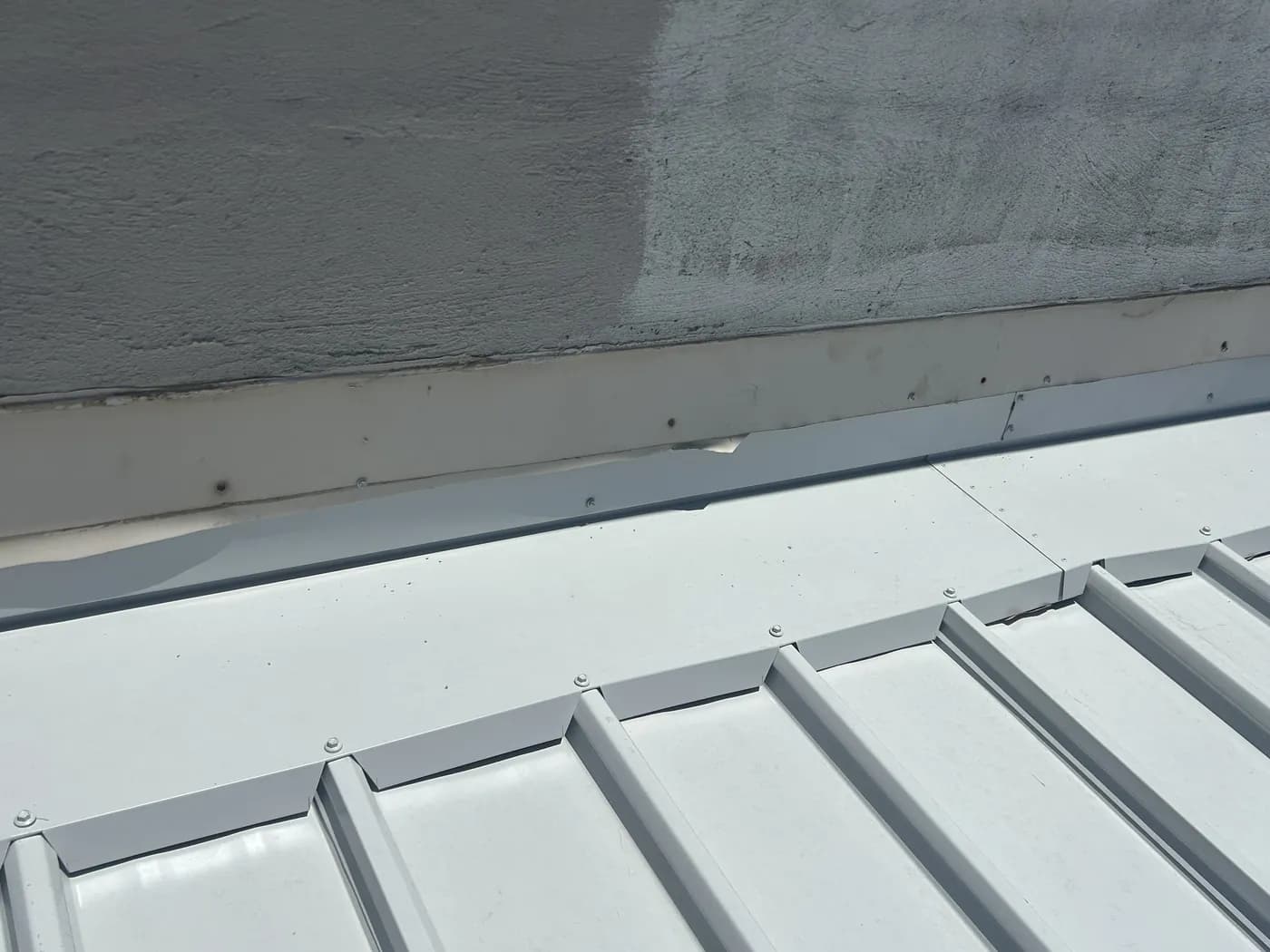
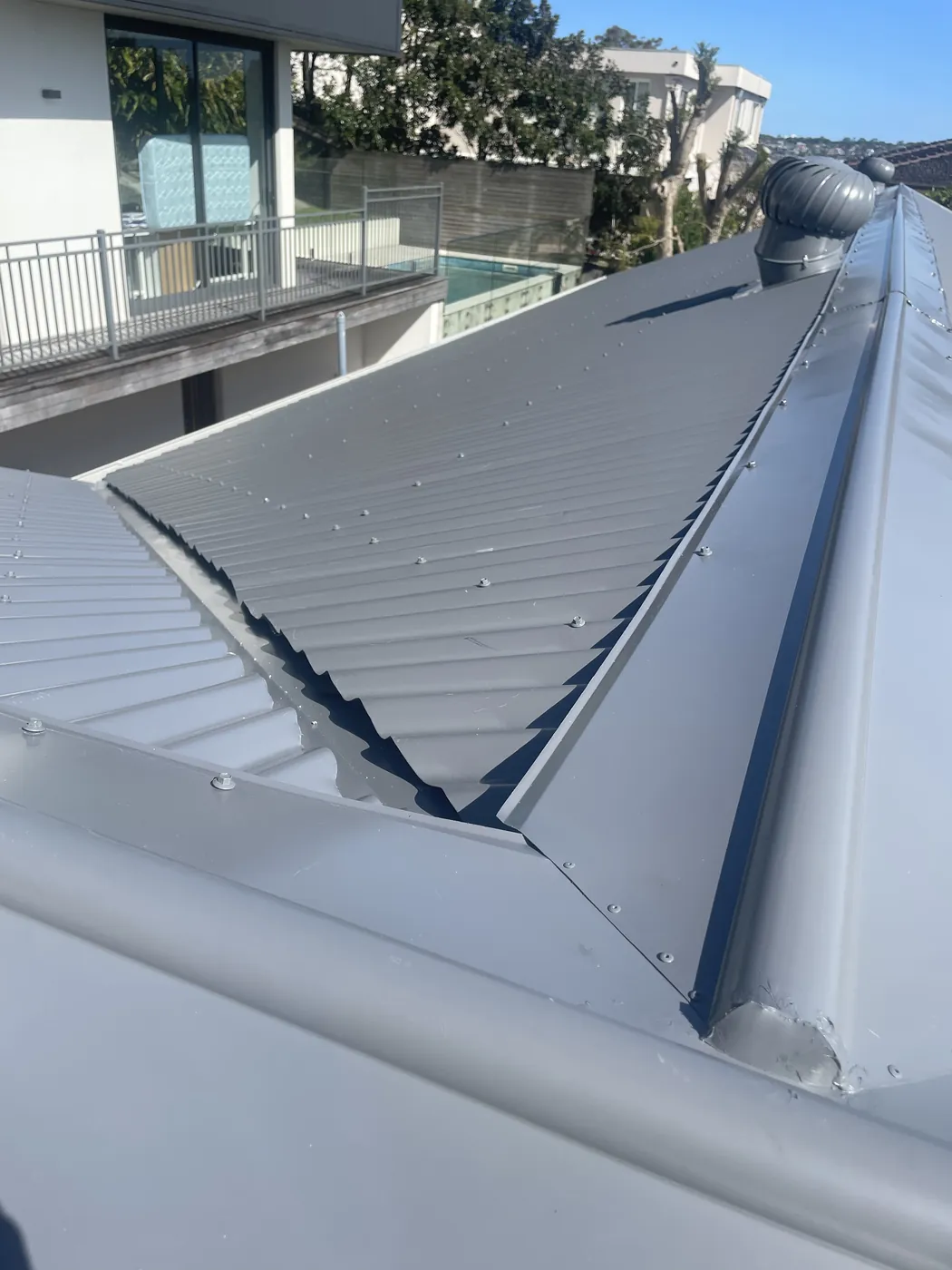
Standing seam has almost no off-the-shelf trim, because the seam height and the pan width change what a junction needs. Ridge, barge, apron flashing, valley, and anything coming through the roof all get set out and folded for that specific roof.
That is where a standing seam job is either right or it is a very expensive leak, and it is worth asking anyone quoting you how they intend to detail the junctions rather than only what the panels cost.
Penetrations
A flue, a vent or a skylight through a seamed roof needs a proper folded upstand and back tray. A moulded boot pushed over a seam is not a detail.
Valleys
Panels have to be cut and turned into a valley gutter without pinning them, so they can still move.
The bottom of the pan
The pan gets a fold at the gutter end so water leaves the panel rather than running back underneath it.
Expansion
On a long run the panel has to be free to move at one end. Fixing both ends solid is how a beautiful roof develops a wave in it.
Cladding, not only roofing
The same panel turned vertically becomes wall cladding, and this is where standing seam earns its reputation.
A roof and a wall in one material, with the seams lining up and the junction folded rather than covered with a trim, is a specific architectural look and it is not achievable in a screwed profile.
If that is what you are after, it is worth saying so at the quoting stage. The setting out for a roof that continues down a wall is decided before the first clip goes on, not adjusted later.
Common questions
Standing seam: common questions
Is standing seam better than corrugated?
It is better at some things. No exposed fixings, it handles lower pitches, and it reads as one continuous surface. On a cut-up suburban roof at a normal pitch, corrugated is often the more sensible roof for the money.
Does a standing seam roof still need flashings?
Yes, and more of them are custom. There is very little off-the-shelf trim for standing seam, so ridge, barge, apron and every penetration are folded to suit the actual roof.
What is the lowest pitch standing seam can go?
Lower than a lapped and screwed sheet, and the exact figure depends on the panel and whether the seam is mechanically closed. It is one of the questions worth asking on site rather than taking a number off a page.
Can standing seam be used as wall cladding?
Yes. The same panel runs vertically as cladding, which is how buildings get a roof and wall that read as one surface. The setting out has to be planned before installation starts.
Do you do standing seam on existing houses or only new builds?
Both. On an existing house the substrate matters more than it does with corrugated, because a long flat pan shows every dip in the frame, so the frame gets assessed before anything is quoted.
Other services
The rest of what we do

Full re-roof
We take the old roof off and put a new metal one on. While it is open we check the timber underneath and replace anything that has rotted.

New roofs
A brand new roof on an extension, a rebuild or a new house. We start at the bare frame and finish the lot.

COLORBOND
COLORBOND steel in the colour and profile you choose, laid the way the manufacturer says it has to be.
Next step
Get your roof measured properly
On the roof where we can get to it, off satellite imagery where access is awkward. You get a figure for your roof, not a rate applied to a guess.