
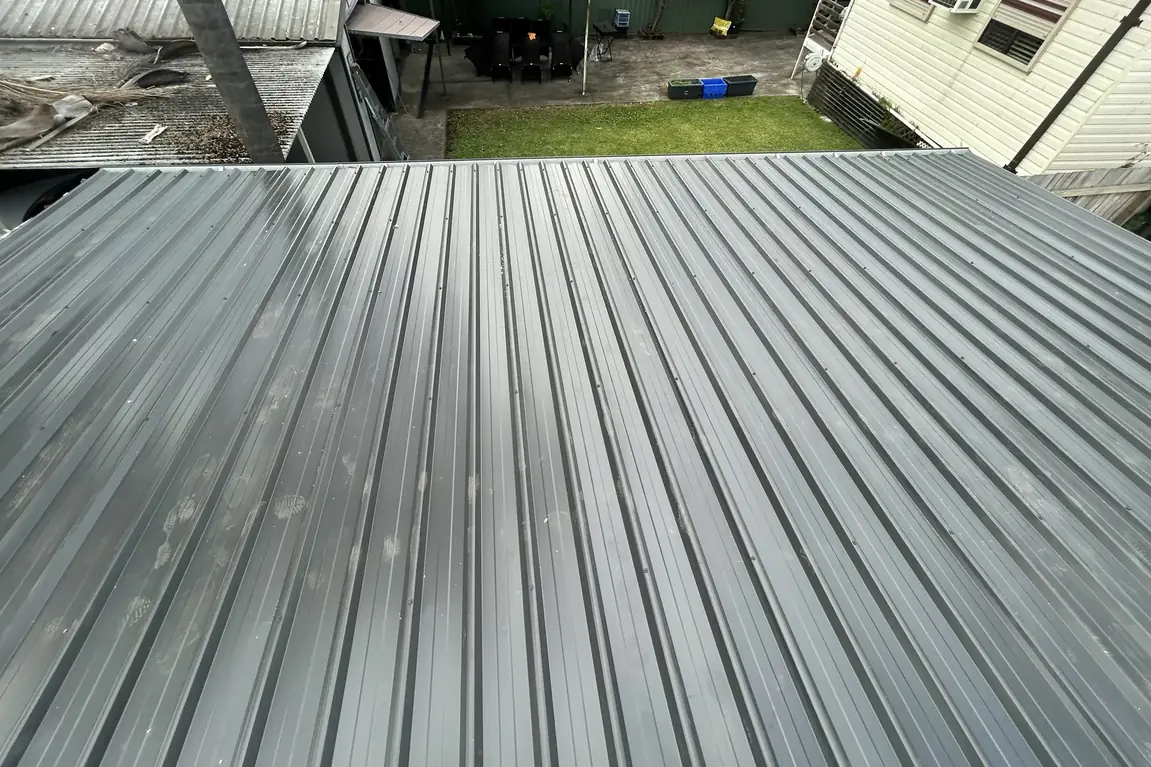
Flat and Low Pitch Metal Roof Replacement in Sydney
Flat and low pitch metal roof replacement in Sydney needs a sheet rated for the slope and careful end laps, where one sheet overlaps the next down the roof, which is detail work for a roof plumber.
- Our roof plumber holds a Certificate III in Roof Plumbing.
- Up to 15 years on our workmanship, in writing.
- We cover all of Sydney and get to the west first.
What the job includes
Pitch assessed before anything else
Every profile has a minimum pitch. Below it, no amount of care keeps water out under wind.
Long single sheets
The best fix for a low pitch roof is usually to eliminate the end lap entirely by running one length.
Concealed fix where it suits
A seamed panel goes lower than a lapped and screwed sheet, and on some roofs it is the only correct answer.
Drainage that works
On a flat roof, drainage matters most. We check the box gutters (gutters built into the roof) and outlets as part of the job.
Any size of job
There is no lower cut-off, and the crew scales up to roofs of around a thousand square metres.
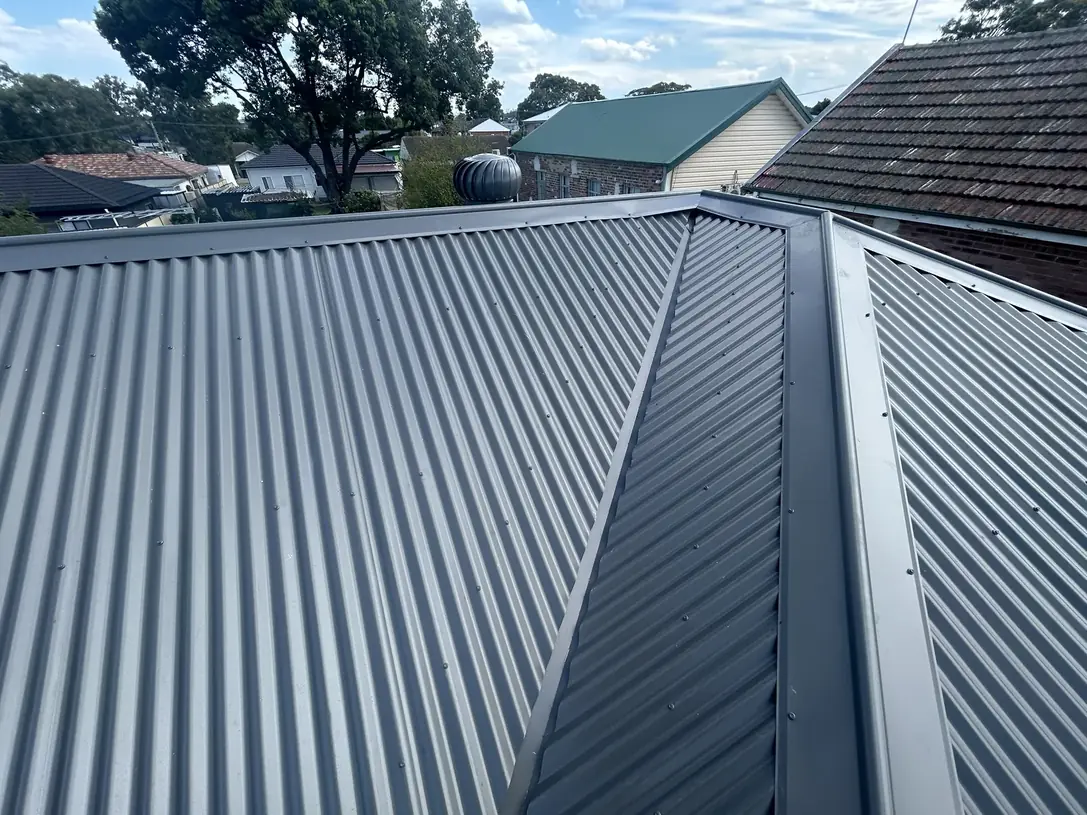
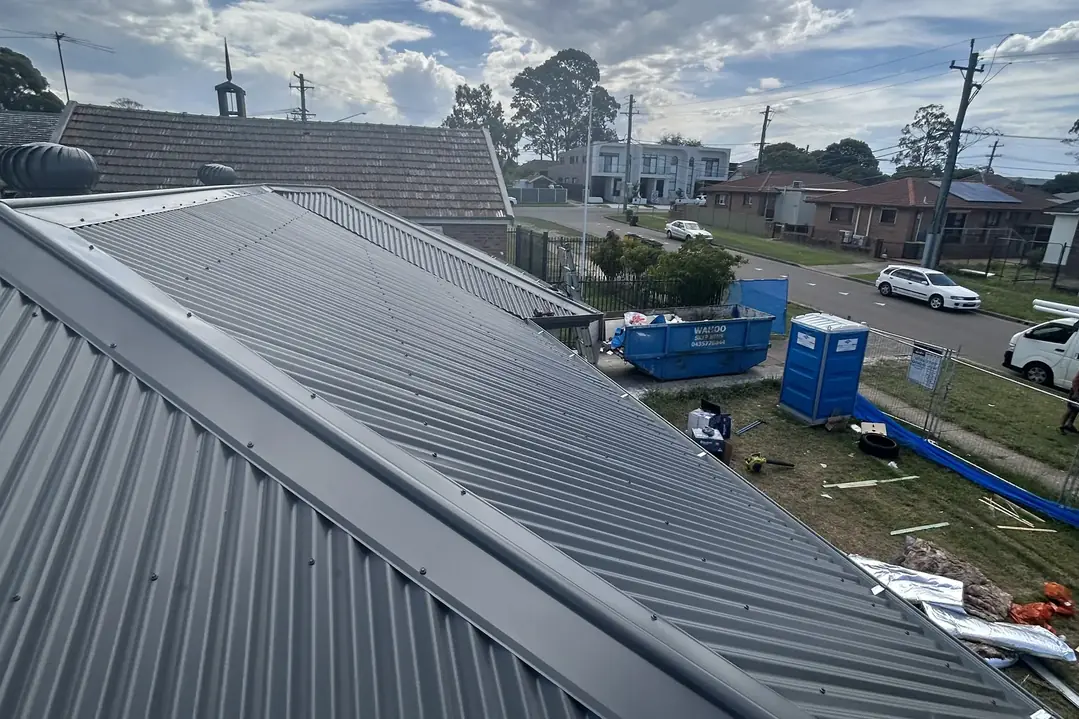
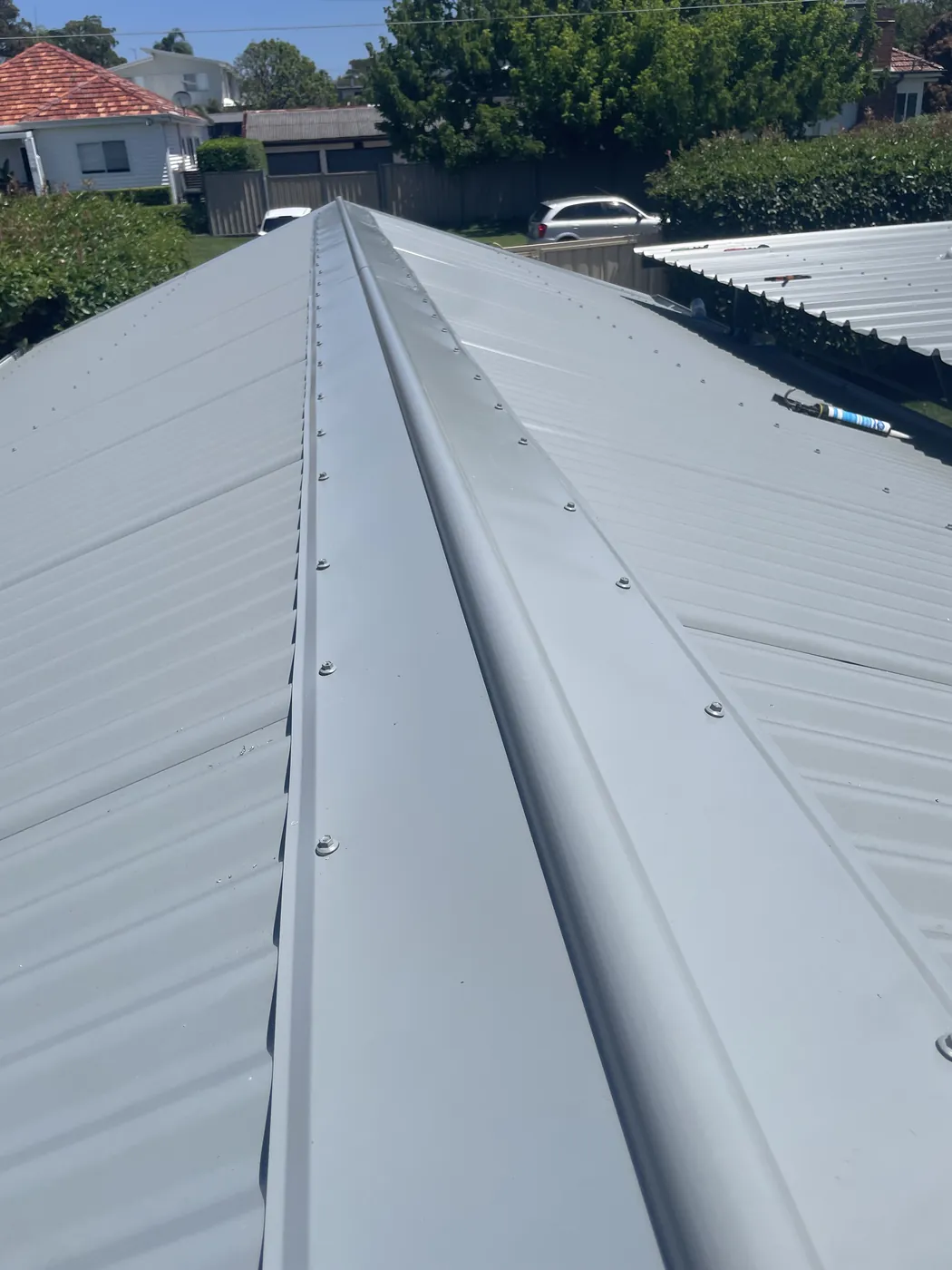
A few of our roofs
From the first phone call to the clean up
1. Measure the pitch
We measure the slope on the roof, because it decides which sheet will keep water out.
2. Find out why it leaked
On a low pitch roof the answer is nearly always an overlap between sheets, something coming through the roof, or a box gutter, rather than the middle of a sheet.
3. Choose the profile to the pitch
Deeper ribs, fewer laps, or a concealed fix panel. This is the decision that determines whether the new roof works.
4. Set out to avoid end laps
Where the run allows it, one sheet from top to bottom, which removes the most common failure point completely.
5. Detail the edges and outlets
Box gutters, drain points, overflows and anything coming through the roof. On a flat roof these matter most.
What you should know before you commit
A completely flat roof needs a waterproof membrane, not metal. What most people call a flat roof is a low pitch roof, and those we do.
Skillion extensions, rear additions, verandah roofs and 1960s and 70s houses with a very shallow fall are the common ones in Sydney, and each needs the right sheet for its slope.
The slope decides the sheet
Every roof sheet profile carries a minimum pitch it is rated to work at. That figure exists because at a shallow angle, wind drives water back up the laps faster than gravity takes it down.
This is why a low pitch roof can be perfectly installed, with every screw in the right place, and still leak. The sheeting was never rated for the fall it was put on.
So the first thing that happens on a low pitch job is that somebody measures the actual pitch, and the profile follows from that number rather than from what is cheapest.
Each sheet has a minimum slope. Lysaght's Custom Orb corrugated needs 5 degrees, Spandek 3, Trimdek 2, and most Klip-Lok 1. AS 1562.1 and the SA HB 39 code set out how each one is laid.
Corrugated
The most common profile and the least tolerant of low pitch. On a shallow roof it is frequently the wrong answer.
Wide rib trapezoidal
Deeper ribs carry more water in the pan and go lower than corrugated, which covers a lot of Sydney skillions.
Concealed fix and standing seam
No screw holes and a raised seam. This is what goes on when the pitch is below what a lapped sheet can do.
Waterproof membrane
A dead-flat roof needs a rubber-like waterproof sheet, called a membrane, not metal. We will tell you if yours is that flat.
End laps are where low pitch roofs fail
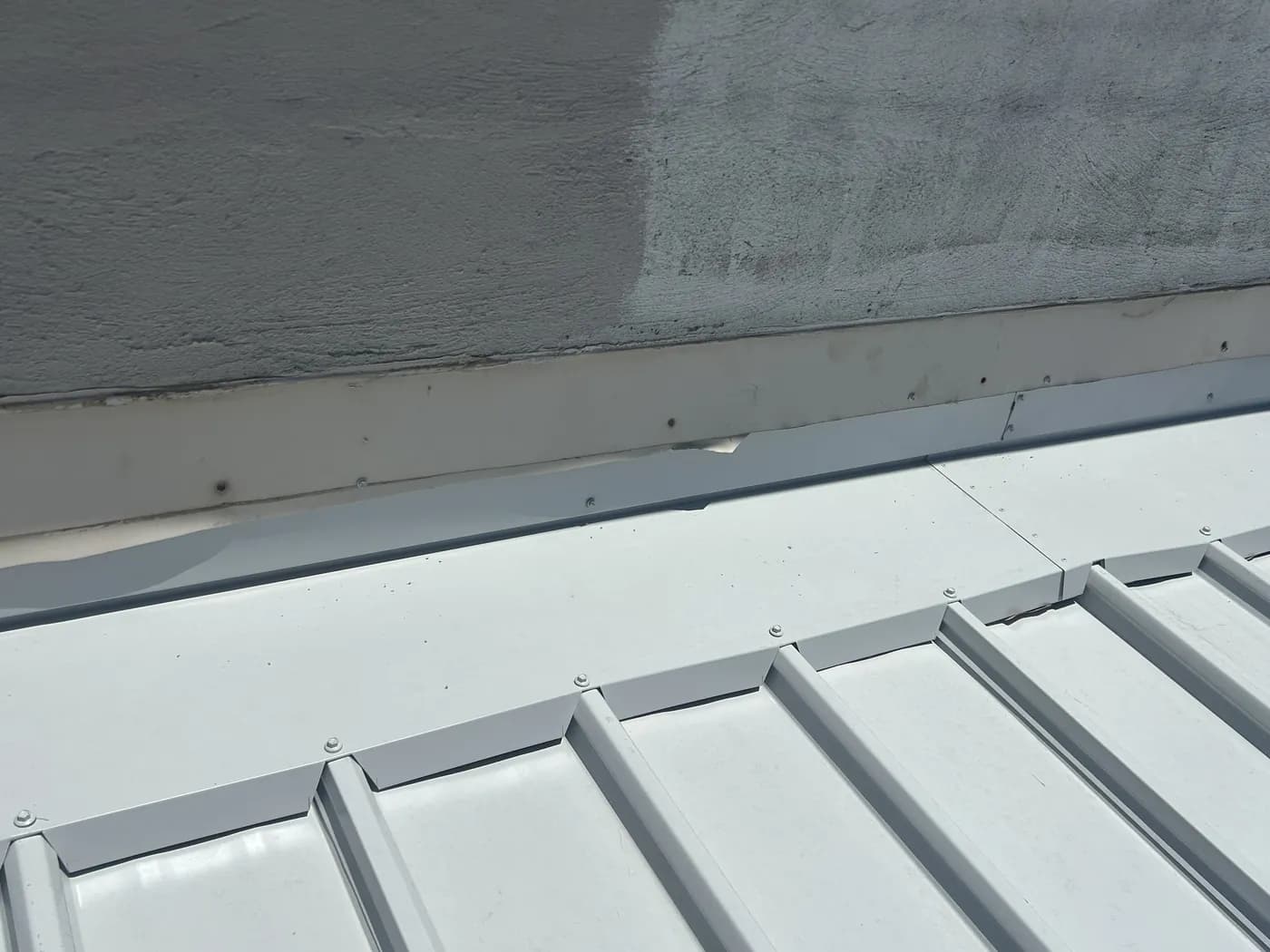
An end lap is where one sheet overlaps another partway down the roof. On a steep roof water crosses that joint and keeps going. On a shallow one it sits there.
Wherever the run allows it, the answer is a single sheet from the top of the roof to the gutter with no end lap at all. Sheets are rolled to length, so this is usually a question of access rather than of what is available.
Where a lap cannot be avoided, it gets sealed and screwed together along the overlap rather than just laid over, and that detail gets discussed rather than assumed.
A standing seam roof runs full length panels with no screw holes, which is why it is often chosen for long, shallow runs.
Box gutters and where the water goes
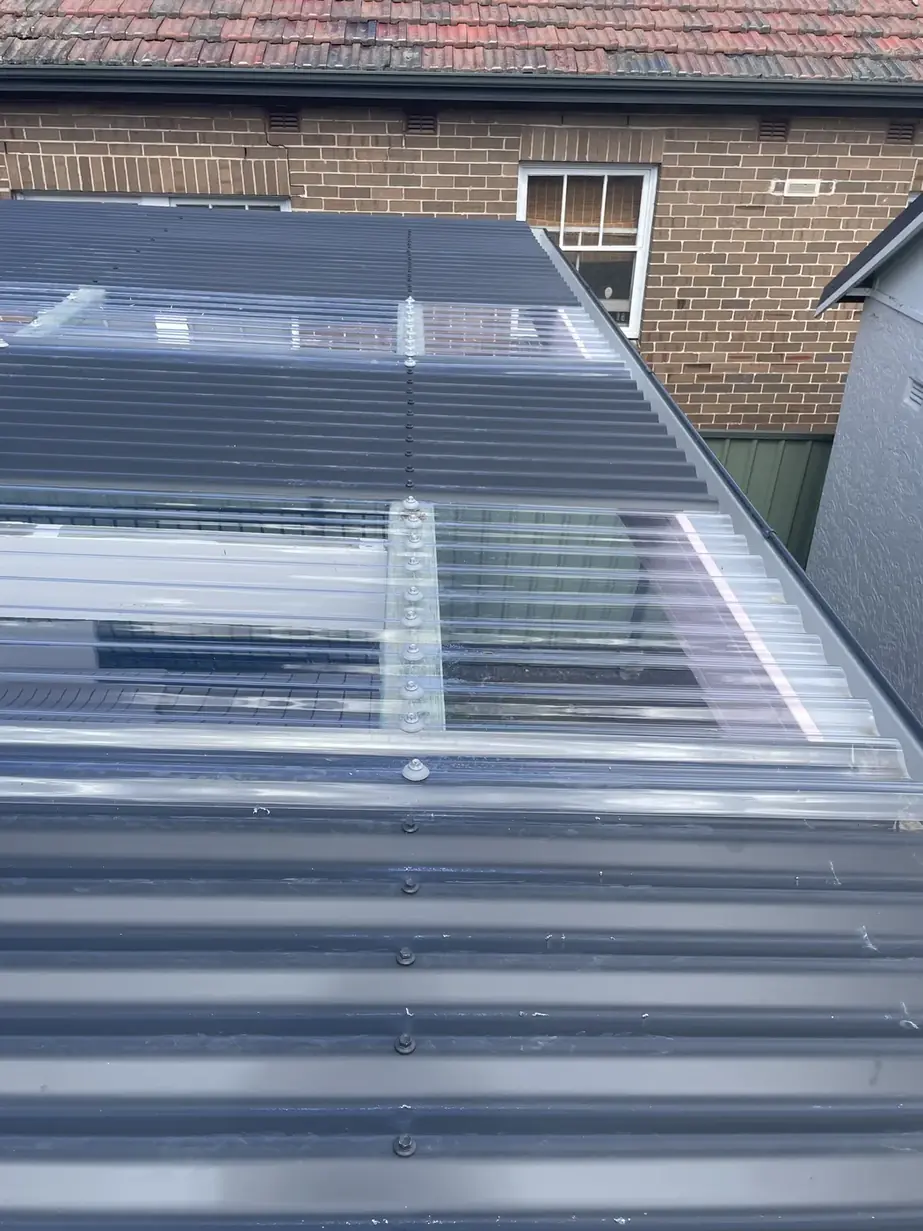
Low pitch roofs frequently drain into a box gutter rather than over an edge, and a box gutter is an unforgiving piece of roof plumbing.
It has to be wide enough, have enough fall along its length, have a sump and outlet sized for the roof area feeding it, and have an overflow that discharges somewhere visible rather than into the building.
Many low-slope roofs that leak in heavy rain have a blocked or undersized box gutter, and replacing the sheeting without touching it fixes nothing.
Box gutters are sized under AS/NZS 3500.3, the stormwater drainage standard. A skillion that drains to an eaves gutter instead is guttering and downpipes work.
Below the lowest rated pitch
There is a point where the fall is low enough that a membrane roof suits better than metal, and the pitch measurement shows where your roof sits.
What changes the price
Read the cost guideThe area, and the shape
Two roofs the same size can cost different amounts. Hips (the sloping edges where two roof faces meet), valleys and dormer windows mean more cutting and more flashing, and that is where the hours go.
What is under the sheet
Rotten battens, the timber strips the sheets are screwed to, get replaced, and nobody knows how many until the old roof is off. Our quote says how they are priced.
Getting on and off it
A single storey with a driveway beside it is a different job to a three storey terrace on a shared wall. Access decides scaffold, and scaffold is real money.
The profile and the coating
The shape of the sheet (corrugated, square-ribbed or standing seam) and the grade of coating you pick both change the sheet price. Standing seam is the dearest and is not always the right answer.
Common questions
Flat and low pitch: common questions
Can you put a metal roof on a flat roof?
On a low pitch roof, yes, with a profile rated for that pitch. On a completely flat roof, a membrane suits better than metal.
Why does my low pitch roof leak when the sheets look fine?
Nearly always an end lap, a penetration or a box gutter. At a shallow fall, water sits at the joints instead of crossing them.
What is the minimum pitch for a metal roof?
It depends entirely on the profile, which is why the pitch gets measured before anything is quoted. Concealed fix and standing seam go considerably lower than lapped corrugated.
Do I need a box gutter replaced as well?
If the roof drains into one and it is the same age as the sheeting, usually yes. It is also where the leak often was in the first place.
Where we work
We cover all of Sydney and get to the west first.
The rest of what we do
Standing seam
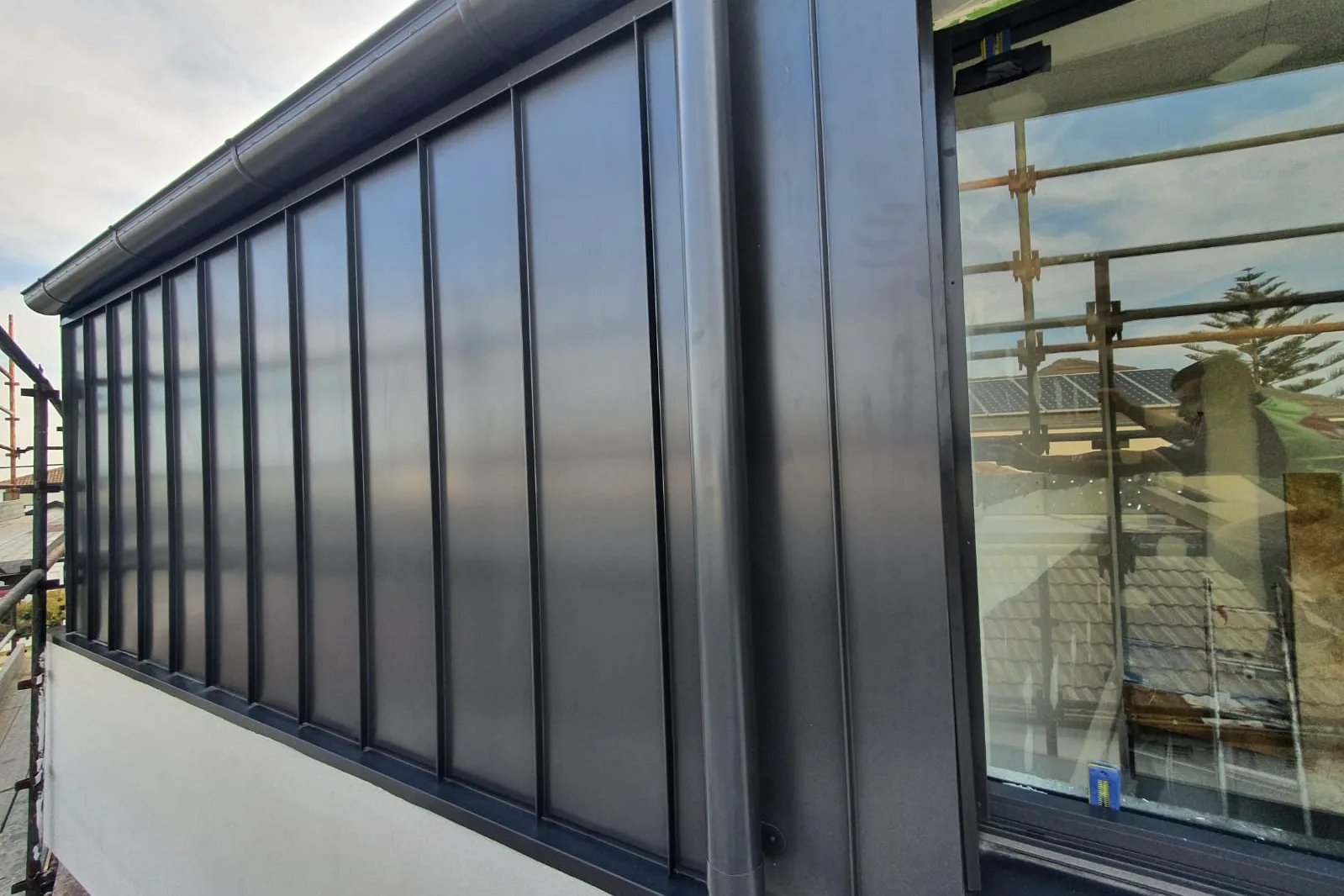
A sharper look with no screws showing on the roof. The panels join along a raised seam instead.
Standing seam →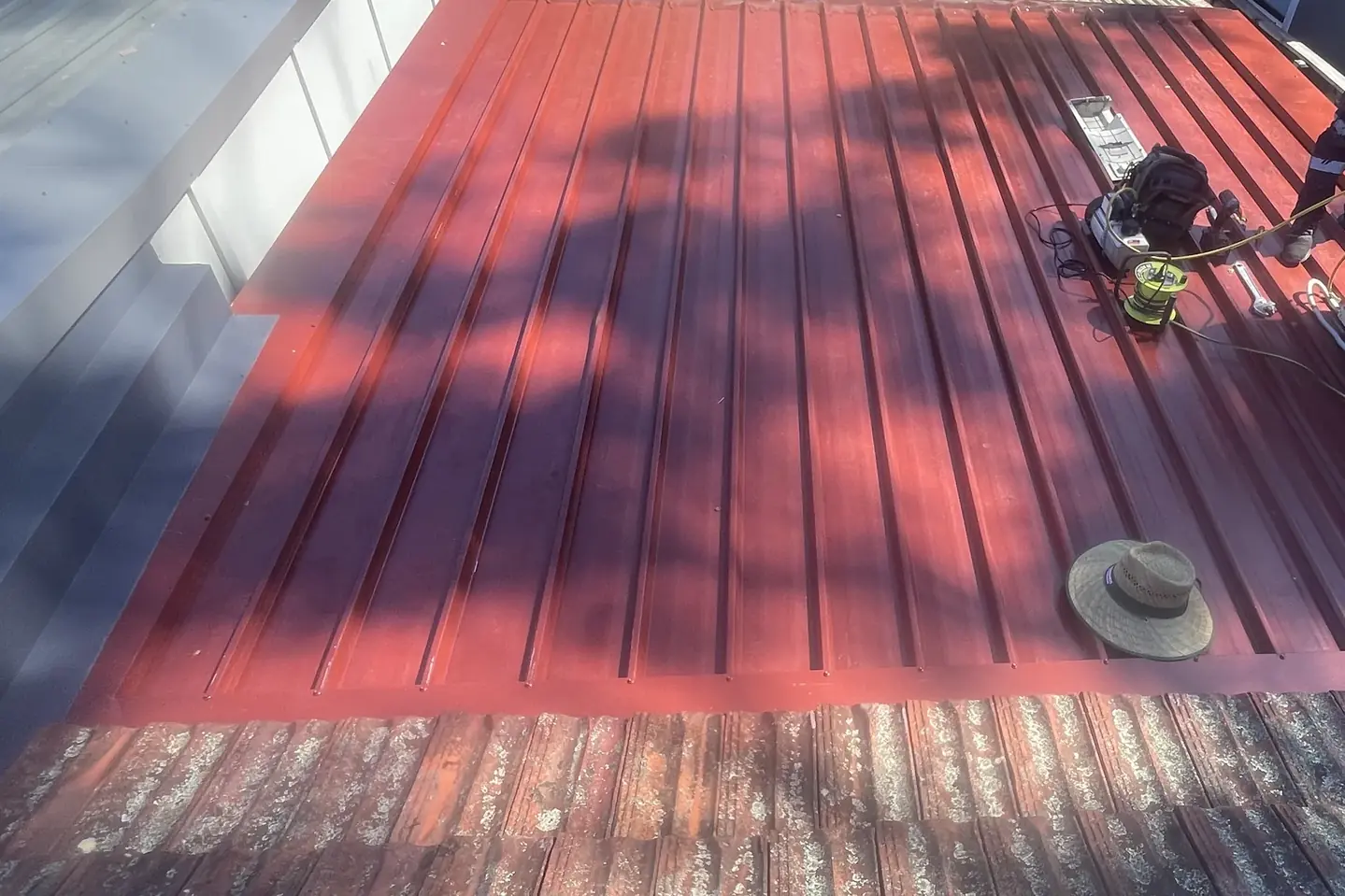
Full re-roof
We take the old roof off and put a new metal one on. While it is open we check the timber underneath and replace anything that has rotted.
Full re-roof →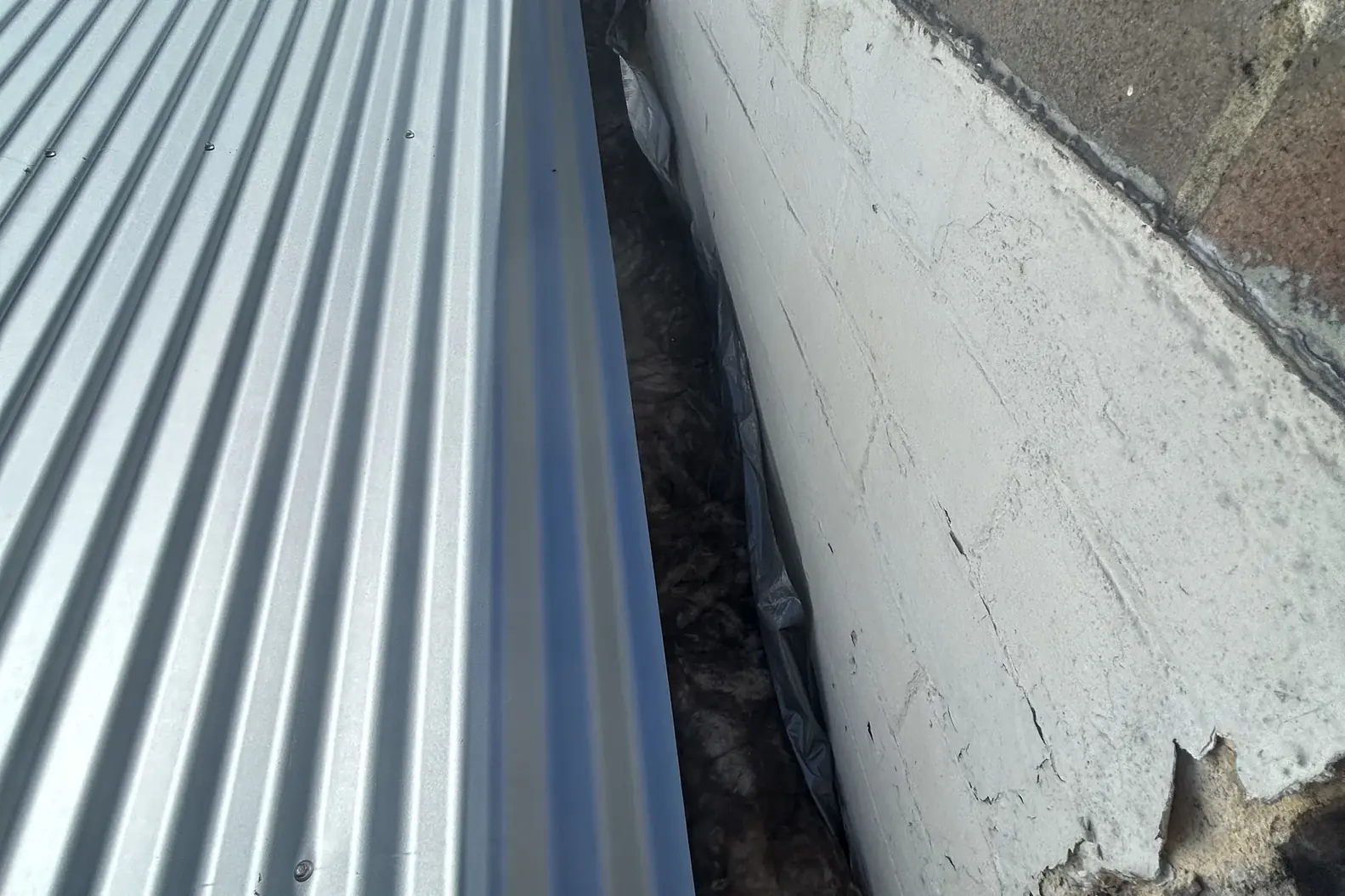
Guttering
New gutters, downpipes and fascia (the board the gutter is fixed to), either with a new roof or on their own.
Guttering →Get your roof measured
On the roof where we can get to it, off satellite imagery where access is awkward. We measure your roof and price that roof.