Overview
Summarise with AI
Opens the assistant with a summary prompt. Gemini does not accept a prompt in the link, so paste it there.
A dark roof absorbs more solar heat than a light one, and in Western Sydney, where summer temperatures run well above the coast, that difference is real. Whether it is felt inside the house depends far more on ceiling insulation than on the roof colour, because the ceiling is the barrier between the hot roof space and the room. The practical conclusion is that roof colour and ceiling insulation are one decision rather than two: choosing a dark roof over a poorly insulated ceiling is where people notice the heat, and choosing it over a well insulated one usually is not.
Key points
- Dark roofs absorb more heat than light ones, which is not in dispute
- The ceiling, not the roof, is what keeps the heat out of the room
- Western Sydney runs consistently hotter than the coast in summer
- Choose colour and ceiling insulation together, not months apart
- The insulation blanket under the sheet also reduces the roof space load
- A re-roof is the cheapest time in the life of a house to fix ceiling insulation
What roof colour actually does
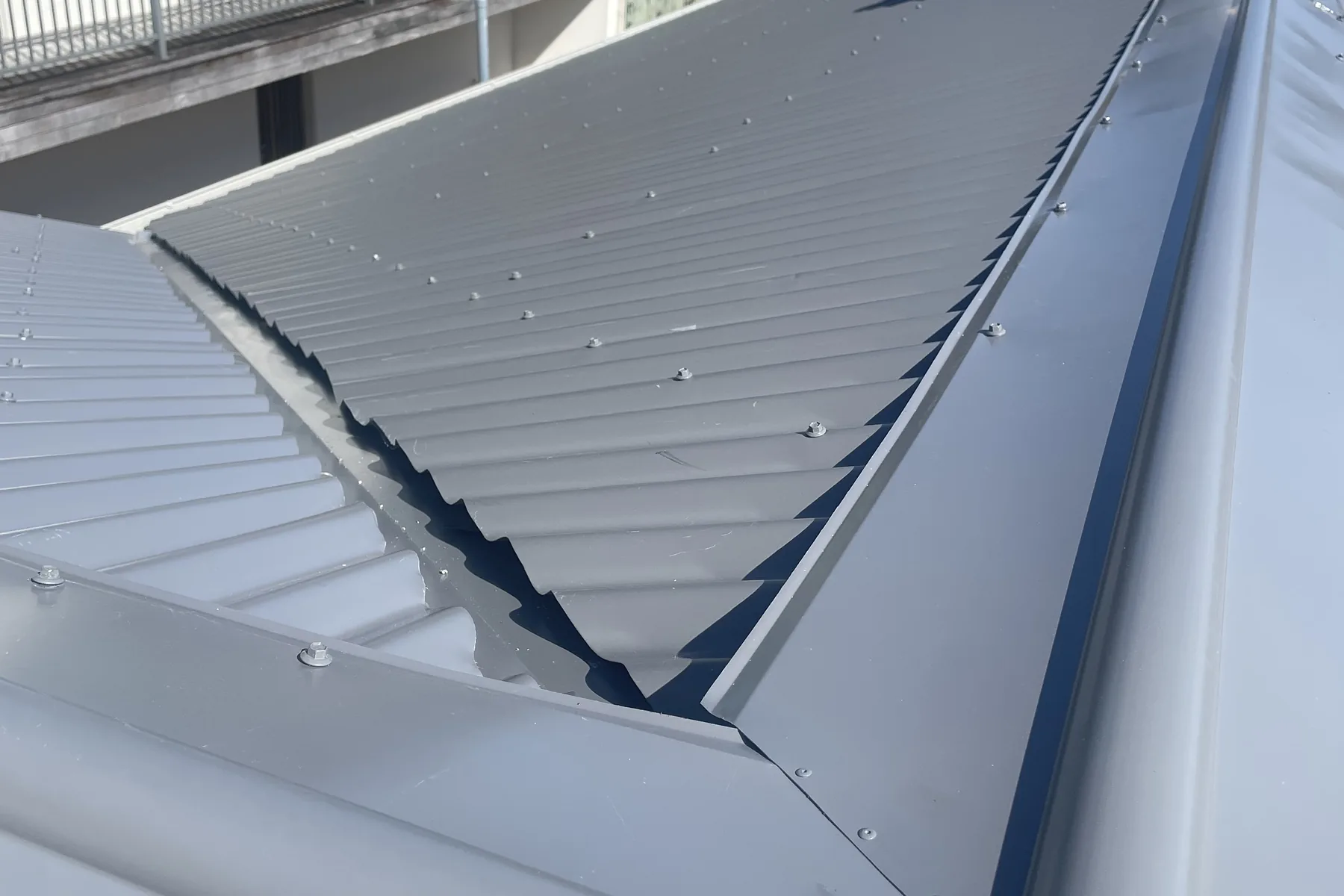
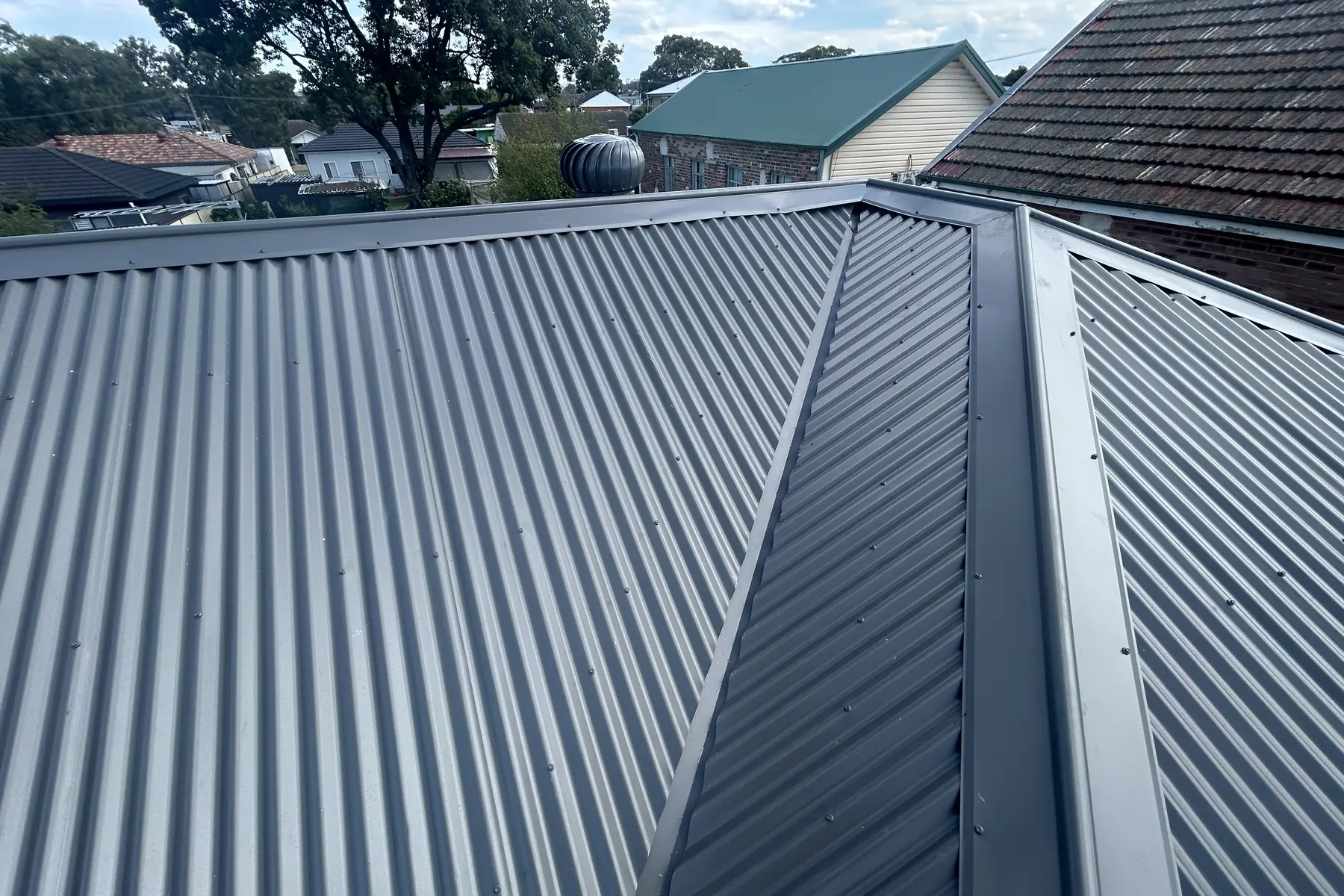
A dark surface absorbs more of the sun that lands on it and a light surface reflects more of it away. On a roof in a Western Sydney summer that difference is substantial and it shows up as roof space temperature.
What it does not directly control is the temperature of the room below, because there is a ceiling in between, and that ceiling is doing most of the work of keeping the heat out.
This is why two houses with identical dark roofs can feel completely different inside. The difference is above the ceiling rather than above the rafters.
Why Western Sydney is a different case from the coast
The temperature difference between Penrith and the eastern beaches on a hot summer day is not marginal, and the sea breeze that moderates the coast arrives late or not at all out west.
It means the roof space is holding heat for longer, and that a house which would be comfortable in a coastal suburb is not automatically comfortable in Blacktown or Campbelltown with the same specification.
It is the single strongest reason to treat the insulation question seriously here rather than as an optional extra on the quote.
The three layers, and what each one does
A roof is not one thing between you and the sun, it is three, and they do different jobs.
- The sheet and its colour
- Absorbs or reflects solar heat. Colour is the variable, and it is the one everybody discusses.
- The blanket under the sheet
- Slows heat moving from the steel into the roof space, and prevents condensation in winter. It goes in during the re-roof and cannot be added later without lifting the roof.
- The ceiling insulation
- The barrier between the roof space and the room. This is the layer that determines what you feel, and it is the cheapest of the three to improve.
Making the decision properly
The order that works is to decide what you want the house to look like, then make sure the layers behind it can support that choice.
If you want a dark roof, budget for the ceiling insulation to be checked and topped up while the roof is off. It is a small cost against the roof and it is the difference between the colour being a design decision and being a summer problem.
If the ceiling insulation is staying as it is and it is thin, a lighter colour is the safer choice. That is a genuine trade-off rather than a sales position.
What we will actually tell you
We are not going to talk you out of a colour you want, and we are not going to pretend colour is irrelevant either.
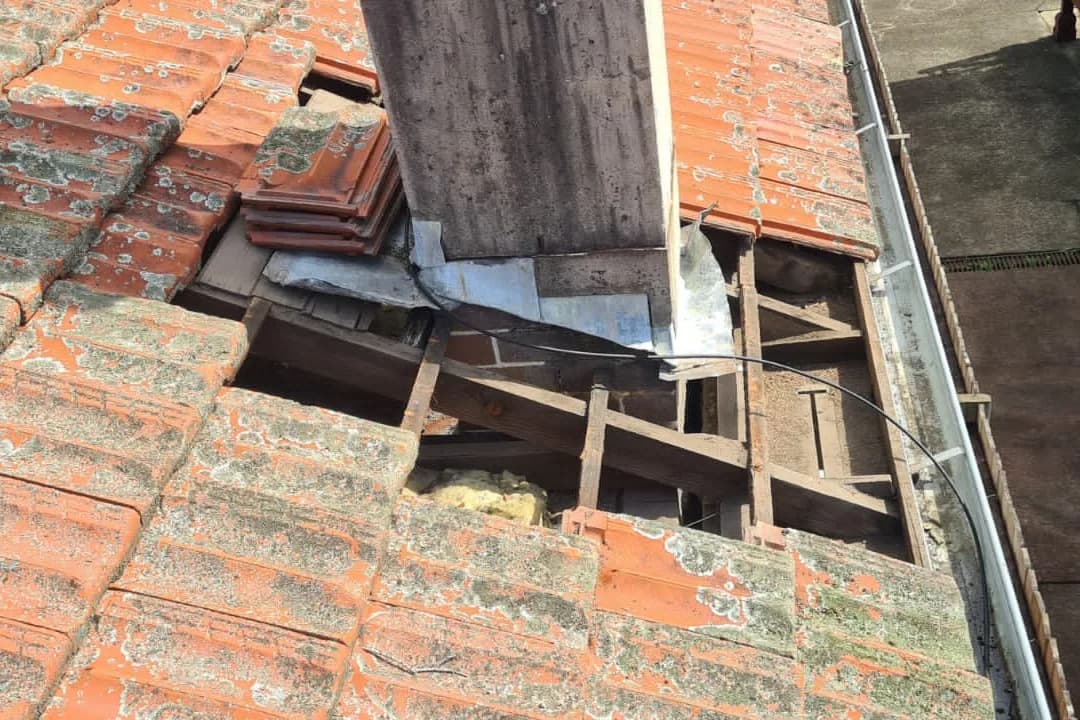
What we will do is say what is above your ceiling when the roof is off, because that is the moment anybody can see it, and it is information you cannot get any other way.
The worst outcome is a dark roof chosen in winter over insulation nobody looked at, discovered the following February. It is entirely avoidable and it costs very little to avoid.
If this sounds like your roof
We will come and measure it.
Ring and describe what it is doing. If it is a repair rather than a replacement, we will say so.
(02) 9072 1993