Overview
Summarise with AI
Opens the assistant with a summary prompt. Gemini does not accept a prompt in the link, so paste it there.
A tin roof is galvanised steel or iron, sheet with a zinc coating, and it is due once rust goes through the sheet at the laps, valleys or gutter line. Replacing it with Colorbond steel means stripping the old sheet, checking every batten and laying a blanket under the new sheet. Any lead or copper on the roof needs dealing with too, because BlueScope says both corrode its steel.
Key points
- A tin roof is galvanised steel or iron, sheet with a zinc coating
- Rust through the sheet at the laps, valleys and gutter line means the roof is done
- Every batten is checked once the old sheet is off, and rotten timber is replaced
- Lead flashings and copper pipes need dealing with, because both corrode the new steel
- A blanket under the new sheet stops condensation and is easiest to add now
- Your price is confirmed when we measure the roof and write the quote
What people mean by a tin roof
A tin roof is almost never tin. It is galvanised steel or iron, which is corrugated sheet with a coating of zinc to protect the steel underneath.
Some older houses in Western Sydney still have their original corrugated iron. You will find it on weatherboard and fibro cottages in the older parts of St Marys and Emu Plains, near Penrith.
BlueScope, which makes Colorbond steel, does not recommend galvanised steel for roofing except in special cases such as intensive animal farming.
How to tell your tin roof is due
Most of this you can see from a ladder at the gutter, or from the manhole with a torch. One sign can be a repair, and several together mean the roof is finished.
A stain that appears after a cold, dry night can be condensation rather than rain. Condensation under a metal roof explains how to tell the two apart.
- Rust holes
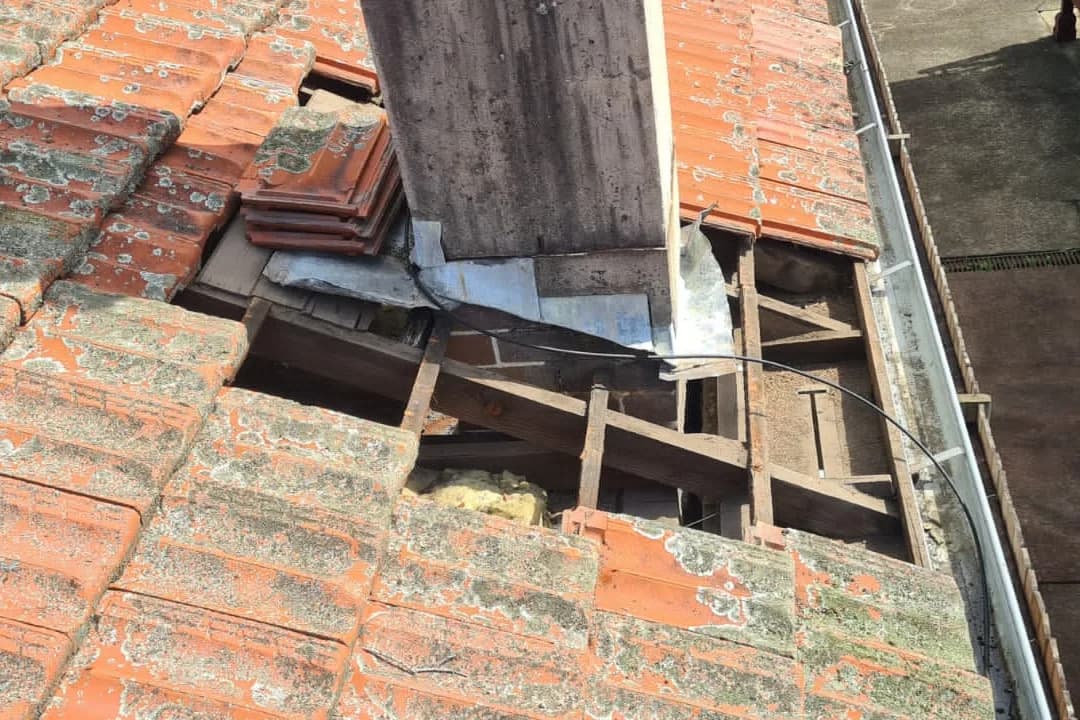
- Surface rust is a warning. Once rust has gone through and you can see daylight from the roof space, that part of the sheet is finished.
- Rust at the laps and valleys
- Laps (where one sheet overlaps the next) and valleys (the channel where two slopes meet) stay wet longest and rust first. Rust along the laps right across the roof means the rest is close behind.
- A ragged edge over the gutter
- The bottom edge of each sheet is wet every time it rains. If it has rusted away, check the gutter under it too.
- Loose fixings
- Fixings are the screws or nails holding the sheet down. Sheets that rattle or lift in wind, or fixings standing up off the sheet, mean the roof is working loose.
- Leaks in more than one room
- One leak can be one failed flashing. Stains in several ceilings point to the whole roof.
What replacing it involves, step by step
We plan each day so the part we strip is covered again before we leave.
- 1. Strip the old sheet
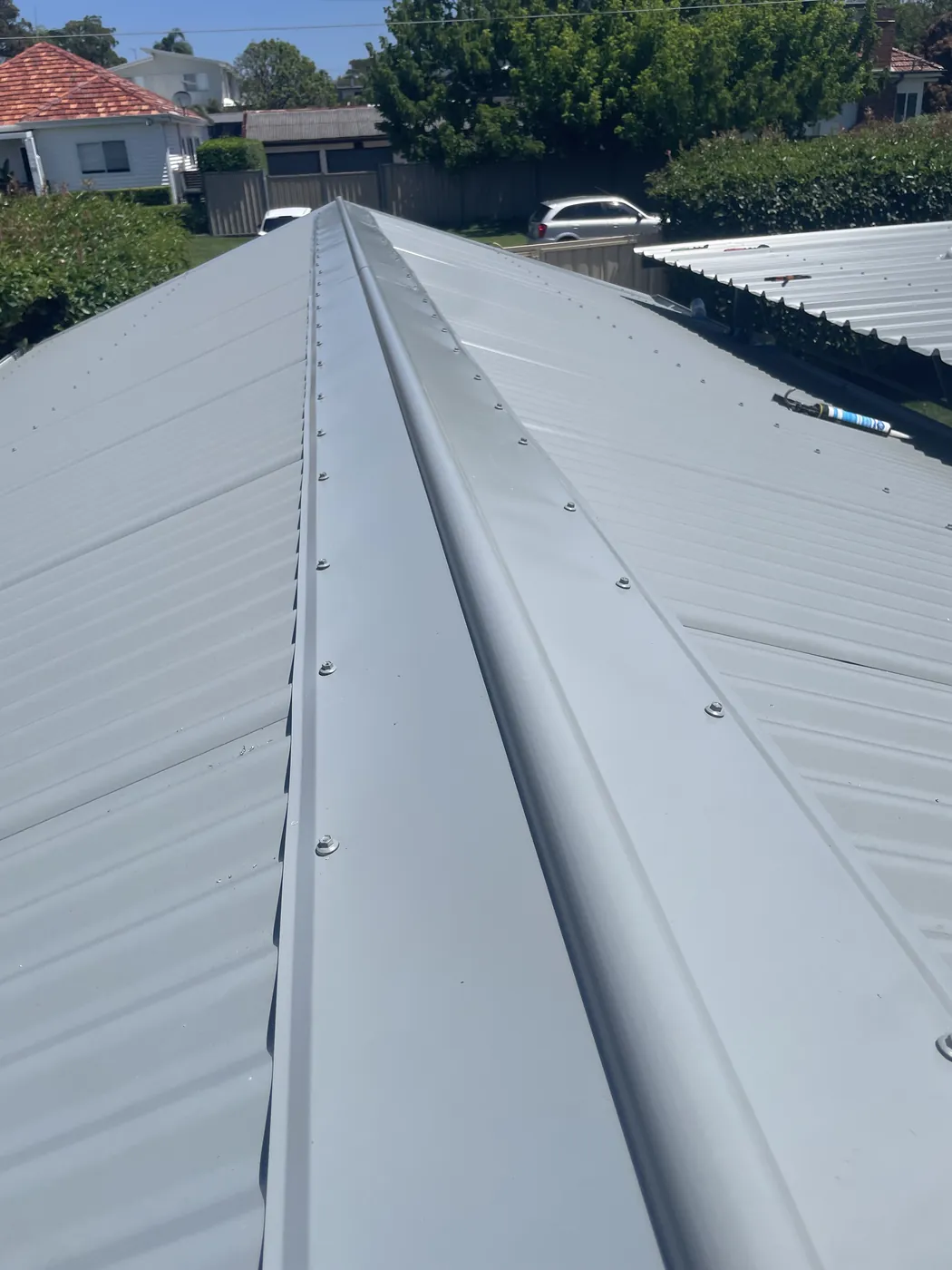
- The old iron comes off in sections, with its fixings and the ridge capping (the folded steel along the top of the roof).
- 2. Check and space the battens
- Battens are the timber or steel strips the sheet is fixed to, and rotten or split ones are replaced. BlueScope's installation guidance puts supports closer together near the eaves and ridge, where wind lift is strongest.
- 3. Lay the blanket
- Sarking is a foil layer under the sheet, and an insulation blanket adds insulation to it. If your roof has nothing under it now, this is the time to add one.
- 4. Lay the new sheet
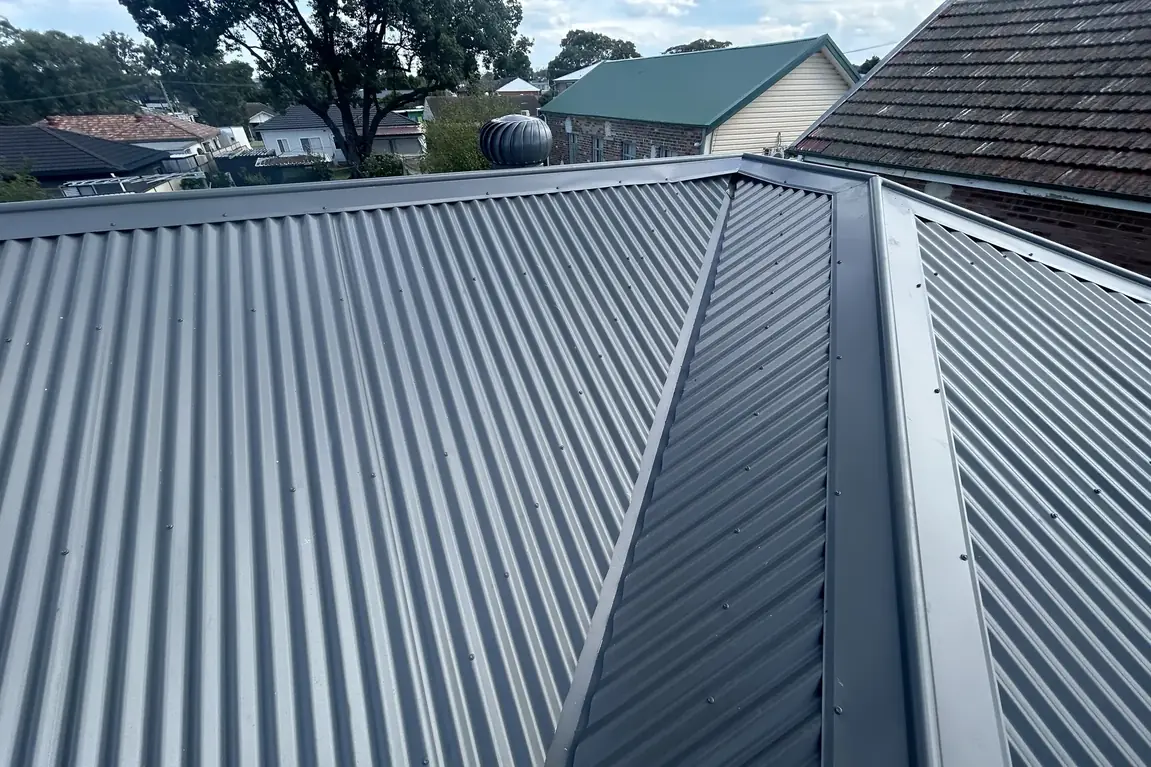
- Colorbond steel goes on in the profile (the shape of the sheet) and colour you chose. Laps run away from the prevailing weather, as AS 1562.1, the Australian Standard for metal roof cladding, sets out.
- 5. Flashings and gutters
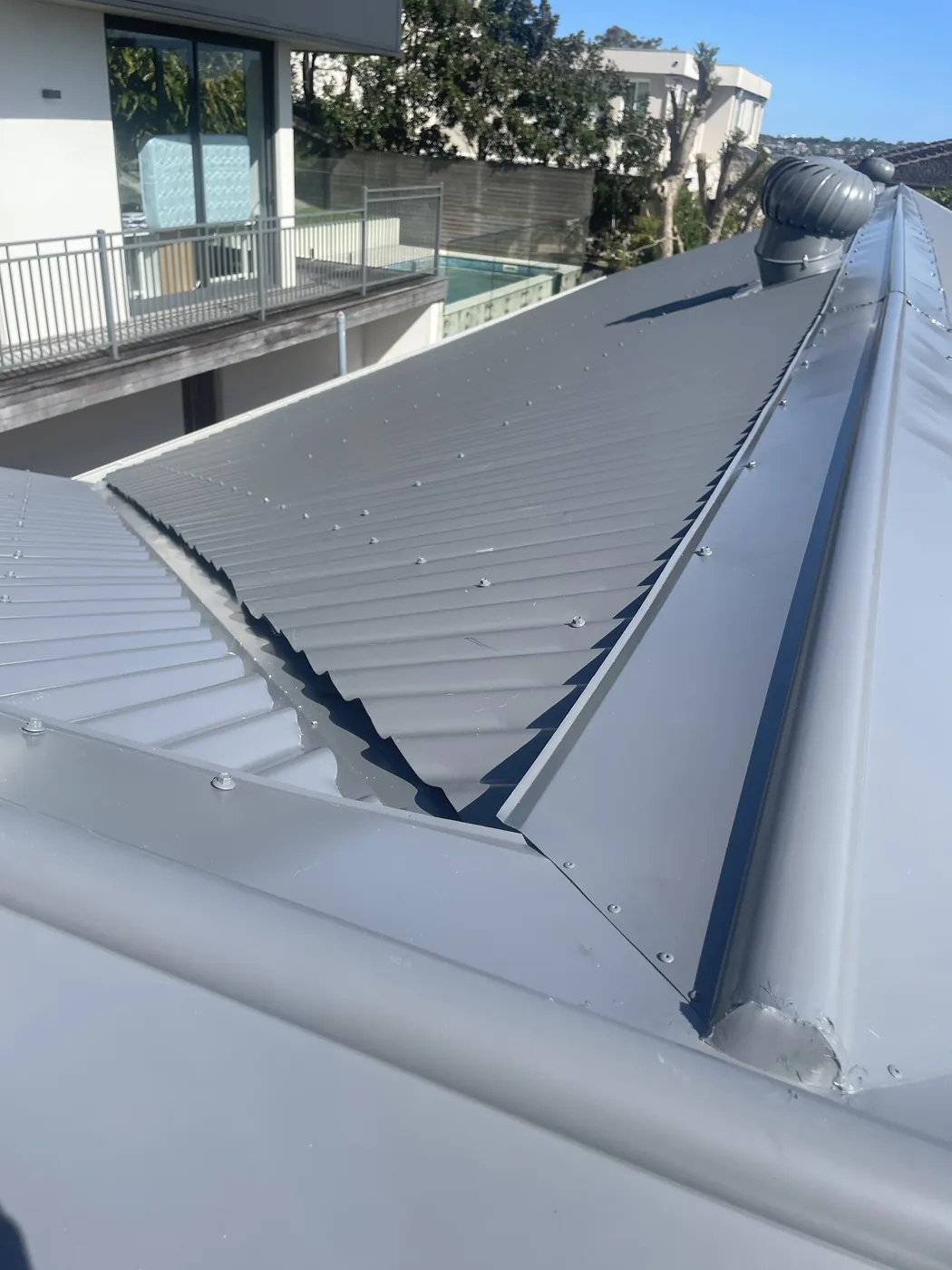
- Flashings are the folded steel pieces that seal joins at walls, chimneys and roof edges, made new for the new sheet. Gutters and fascia (the board the gutter is fixed to) are cheapest to replace now.
- 6. Clear the swarf
- Swarf is the steel filings left by cutting. BlueScope says it rusts quickly and stains a new roof, so it comes off at the end of each day.
Lead, copper and asbestos on an older house
Older houses can have lead flashings, copper pipes on the roof and asbestos in the eaves, and each one changes the job.
- Lead flashings
- Lead is the soft grey metal folded over joins at chimneys and brick walls. BlueScope's flashing materials bulletin says lead corrodes Colorbond and Zincalume steel, by touch or by water running off it. Where lead is built into brickwork and has to stay, the bulletin says to paint it, top surface included.
- Copper pipes
- The same bulletin says water running off copper corrodes the steel, and names hot water overflows. It says to paint copper pipe and run the overflow past the roof, preferably to the ground.
- Fibro eaves
- SafeWork NSW says a home built before the late 1980s may contain asbestos, and lists eaves, gutters and downpipes among the places it turns up. It needs identifying before anyone cuts or drills near it, and SafeWork NSW recommends a licensed asbestos professional to remove any amount.
How it differs from replacing a tile roof
A tin roof replacement and a tile to metal conversion end with the same kind of roof, but they start from different places.
- Less to take off
- Tiles are heavy to lift off a house and cart away. Old iron is light sheet, so stripping and disposal are a smaller part of the work.
- Condensation may already be happening
- An old iron roof with nothing under it is sealed sheet over the roof space, like a new metal roof. Stains put down to leaks can be condensation, and the blanket under the new sheet stops it.
- Pitch still gets checked
- Pitch is the slope of the roof, and BlueScope says a corrugated profile typically needs at least 5 degrees. If you want a different profile, we check your pitch against it before quoting.
What goes into the price
Your price is confirmed when we measure the roof and write the quote. Where a roof cannot be walked safely, we start from satellite imagery and confirm on site before anything is agreed.
Metal roof replacement cost covers what moves a re-roof price in general.
- Area and shape
- How many square metres of sheet go on. Every hip (an outside corner where two slopes meet), valley, chimney, vent and skylight needs cutting and flashing.
- Height and pitch
- A two storey or steep roof takes more safety equipment and more time.
- Battens
- How many need replacing, which is only certain once the old sheet is off. Ask how that is handled before you sign.
- What else is in the job
- Sarking or a blanket, new gutters, lead flashings, a hot water overflow to reroute, and any asbestos.
If this sounds like your roof
We will come and measure it.
Ring and describe what it is doing, and we will book a time to look at it.
(02) 9072 1993